You have 0 items in your cart
Key takeaways
- Skills-based hiring opens access to larger talent pools by removing unnecessary degree requirements and focusing on what candidates can actually do in the role.
- Candidate ghosting stems from poor communication and slow processes, making speed and transparency critical to keeping top candidates engaged through offer acceptance.
- Integrated ATS and CRM platforms eliminate manual work by centralizing candidate data, client records, and job orders in one searchable system instead of scattered tools.
- AI tools require human validation in recruitment to assess real problem-solving skills and interpersonal capabilities that technology-enhanced applications cannot demonstrate.
If your team spends most of the week handling urgent issues instead of focused recruiting work, it rarely signals poor effort. A small set of common staffing issues keeps showing up across different parts of your process. Skills gaps, slow workflows, weak onboarding, and unclear expectations quietly pull time, focus, and energy away from placements.
Instead of treating every setback as isolated, use these as a checklist to spot where your systems, tools, or habits need to change.
Staffing challenges and how to overcome them
Staffing agencies deal with fast-changing client needs, candidate expectations, compliance rules, and shifting market conditions.
1. Talent and skills shortage
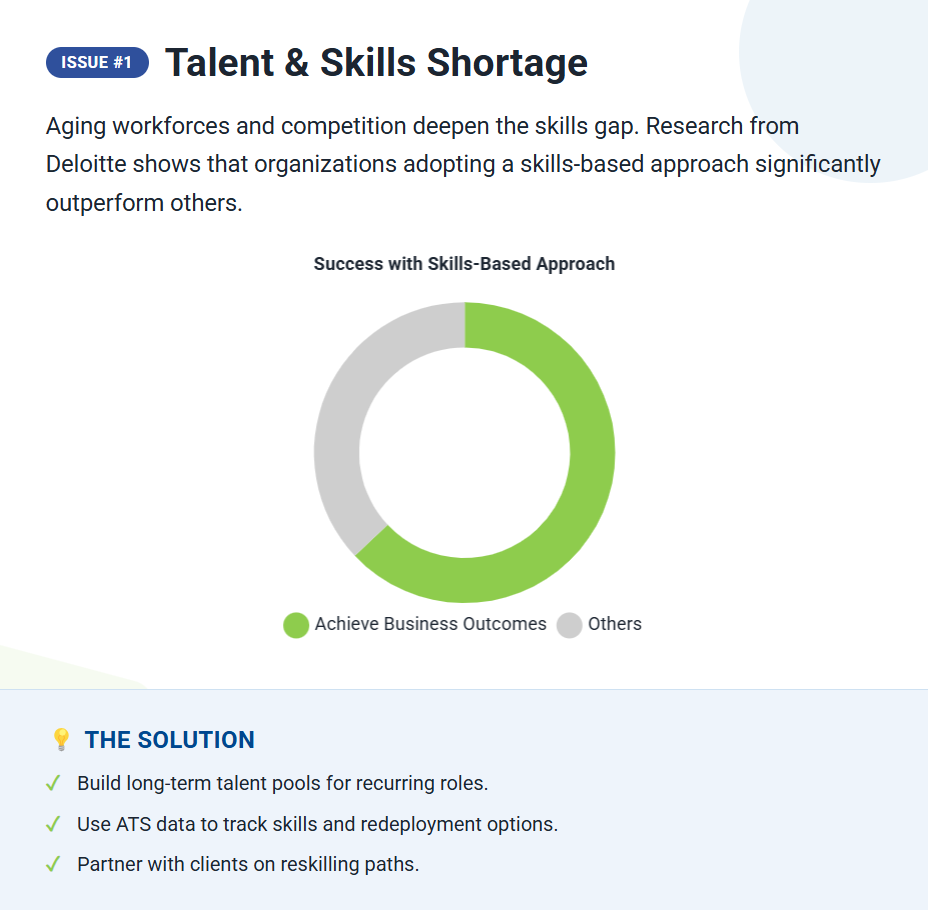
Many agencies are having a hard time finding qualified candidates for specialist or high-demand roles, particularly when required skills change quickly. Aging workforces, limited training budgets, and competition from in-house recruitment teams deepen the skills gap. Research from Deloitte shows that organizations adopting a skills-based approach are 63% more likely to achieve business outcomes.
Practical ways forward:
- Build long-term talent pools and candidate pipelining for recurring roles
- Use ATS and CRM data to track skills, past placements, and redeployment options through dedicated sourcing and job board tools
- Partner with your clients on reskilling paths for promising candidates with adjacent skills
2. Employee turnover and retention
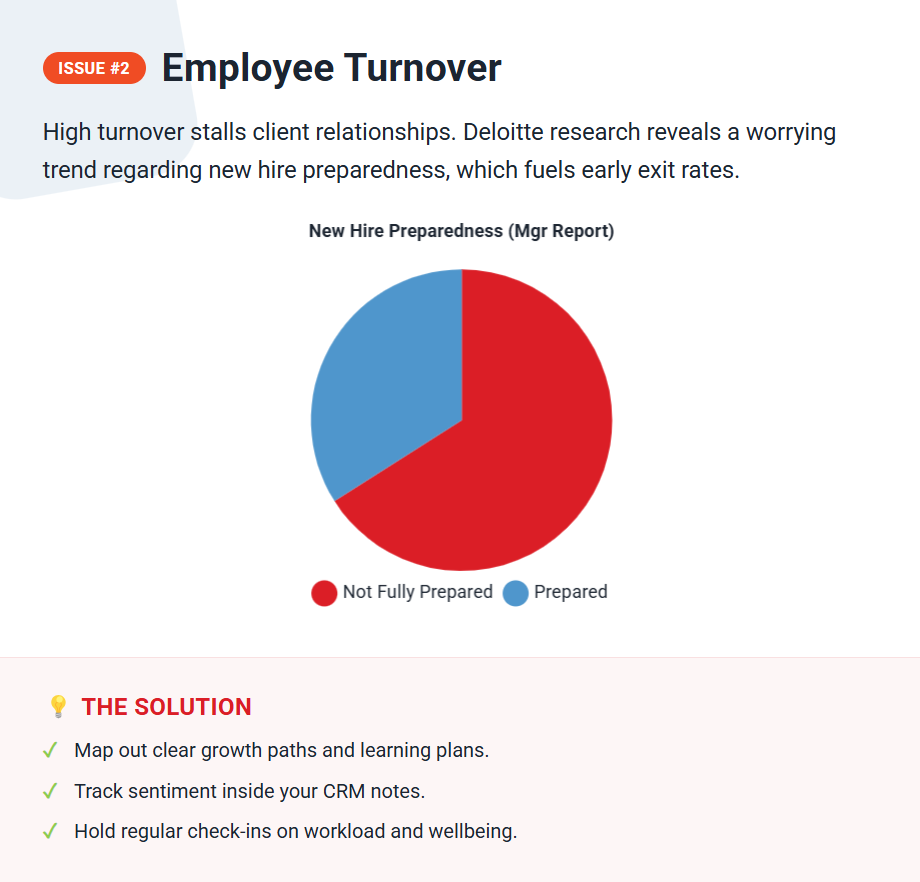
High recruiter turnover cuts productivity, stalls client relationships, and drives up hiring costs. It links back to employee burnout, unclear career paths, and company culture that rewards short-term wins over sustainable work habits. Deloitte research shows that 66% of managers and executives report their most recent hires were not fully prepared for their roles.
To improve retention:
- Map out clear growth paths, learning plans, and progression criteria for recruiters
- Hold regular check-ins on workload, wellbeing, and client pressure points
- Track sentiment and engagement across teams inside your ATS or CRM notes
3. Candidate ghosting and poor experience
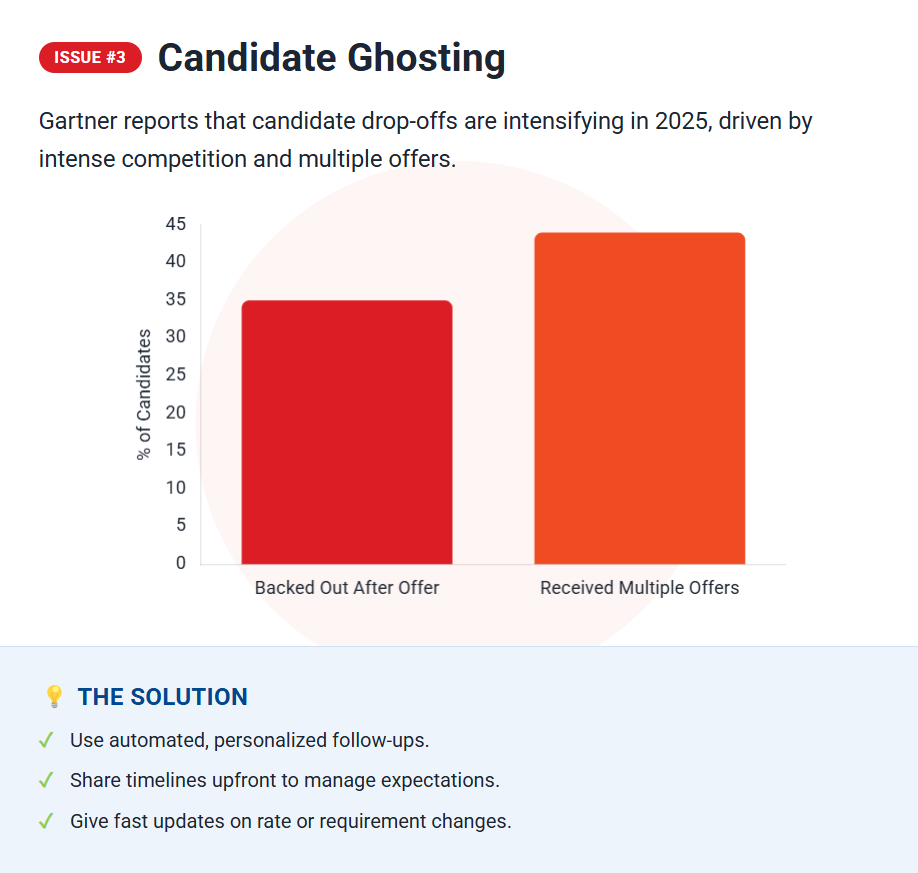
Gartner reports that 35% of candidates backed out after accepting a job offer in early 2025, with competition intensifying as 44% of prospective candidates received multiple offers. Missed updates, last-minute changes, and unclear expectations. These all contribute to drop-offs and make overcoming staffing challenges harder than it needs to be.
Recruiters can reduce ghosting when they:
- Use automated but personalized follow-ups at key milestones, supported by targeted recruitment marketing and automation
- Share timelines up front, including what happens next and when feedback will arrive
- Give fast, honest updates when a role, rate, or requirement changes
4. Inefficient recruitment processes
Manual tasks, disjointed systems, and inconsistent workflows slow hiring and create errors.
A more effective setup includes:
- A unified ATS and CRM covering sourcing, placements, and client management, backed by robust recruitment applicant tracking features
- Standard operating procedures for sourcing, screening, submission, and follow-up
- Regular reviews of bottlenecks, handoffs, and approval steps across the full lifecycle

For a closer look at how agencies structure these workflows in practice, see these real applicant tracking system examples.
5. Onboarding and training gaps
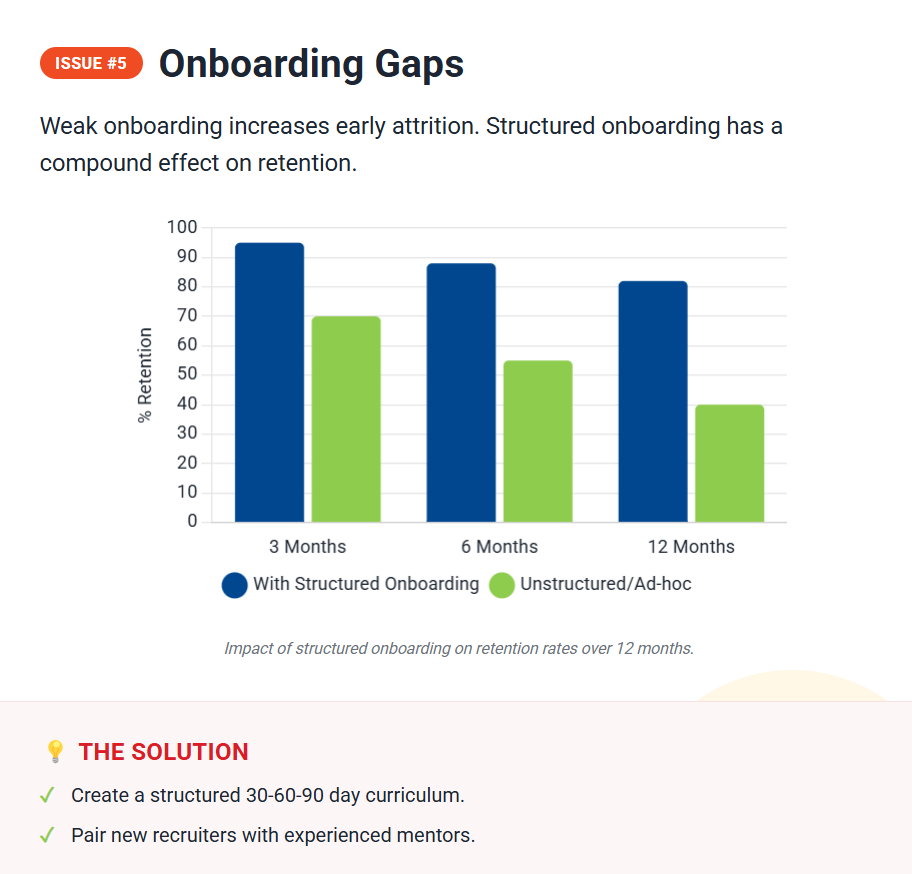
Weak onboarding processes leave new hires guessing, slow ramp time, and increase early-stage attrition. Inconsistent training and unclear expectations contribute to current staffing challenges for both internal staff and field talent.
To build stronger onboarding:
- Create a structured curriculum with defined milestones for the first 30, 60, and 90 days
- Pair new recruiters with experienced mentors who can share real client stories and tactics
- Track completion of key training items directly in your HR or ATS tools, and centralize the process with dedicated onboarding software
6. Understaffing and overwork
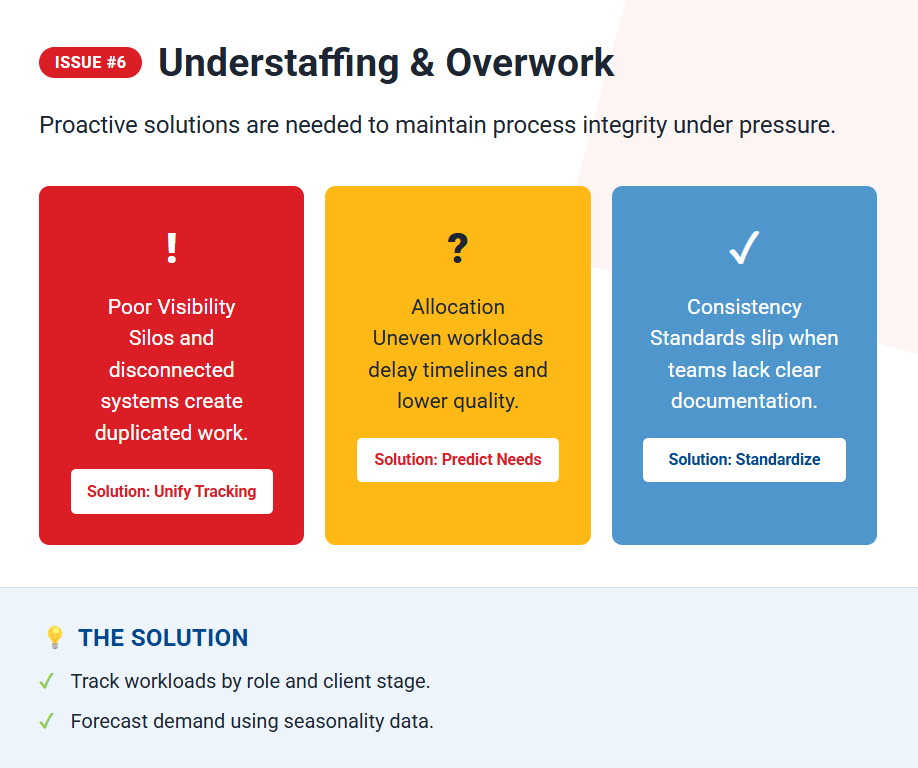
When recruiter bandwidth doesn’t match demand, staff stretch to cover too many roles or accounts at once. That leads to stress, rushed submissions, and lower placement quality. Over time, this kind of staff shortage damages both brand and bottom line.
Agencies can respond by:
- Tracking workloads by role, client, and stage in the pipeline to spot overload early
- Forecasting demand using historical data, seasonality, and client expansion plans
- Offloading repetitive administrative tasks to automation or shared support teams
7. Compliance and regulation pressure
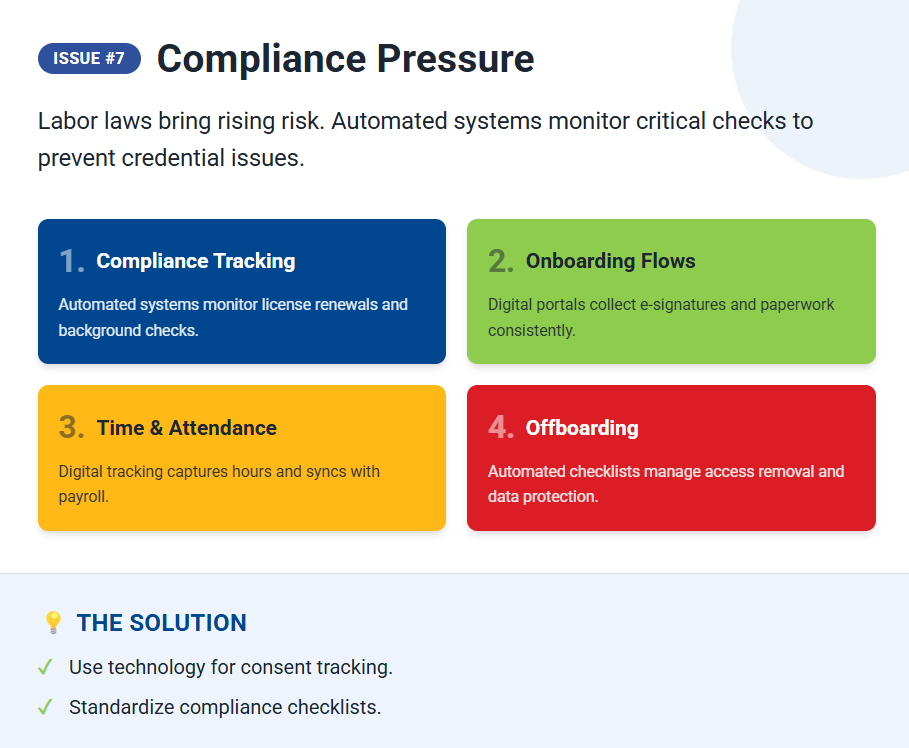
Labor laws, pay transparency rules, background screening requirements, and data privacy regulations continue to evolve. For staffing firms working across locations and industries, this brings rising risk. Manual tracking leaves room for costly errors.
To reduce exposure:
- Use technology for document storage, consent tracking, and audit-ready records
- Standardize compliance checklists for each client, role type, and location
- Set alerts and dashboards for expiring credentials and missing documents, particularly in high-risk areas such as light industrial staffing compliance
8. Technology integration and AI adoption
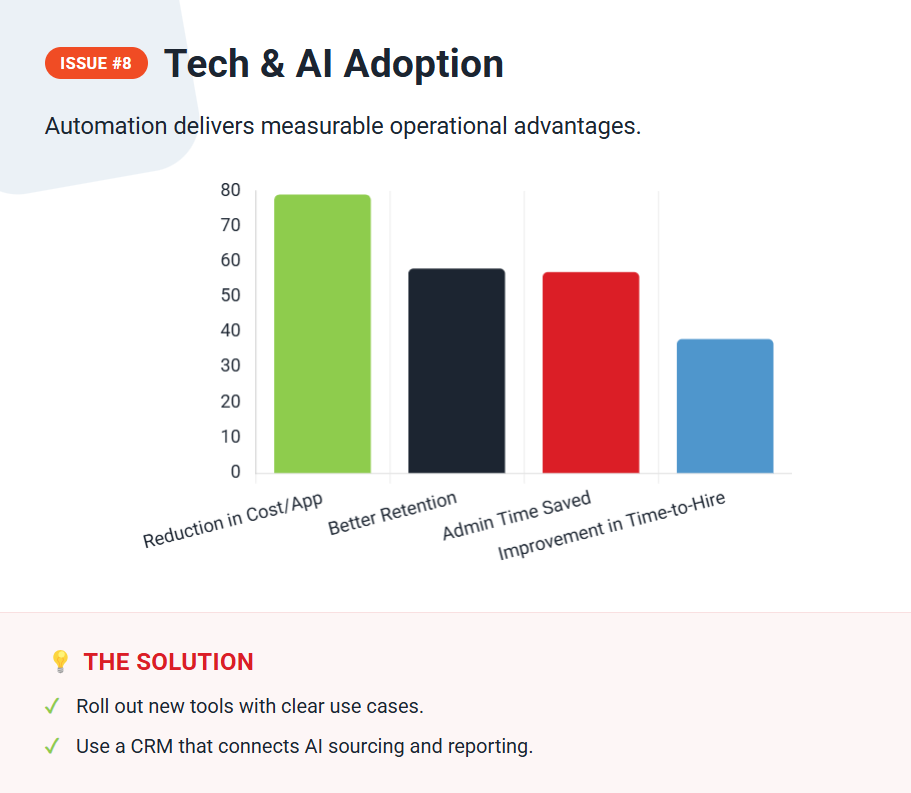
When staffing agencies adopt tools without integration or training, they create data silos and confusion. Teams end up with scattered notes and inconsistent workflows. Pew Research Center reports that 21% of U.S. workers now use AI in their jobs, with candidates increasingly using AI to write resumes and prepare for interviews.
A more sustainable approach:
- Start with a clear view of current systems and where data lives today
- Roll out new tools with training plans, clear owners, and defined use cases
- Use an ATS and CRM that connect AI sourcing, email, and reporting in one place, supported by modern AI recruiting capabilities
9. Hybrid and flexible work challenges
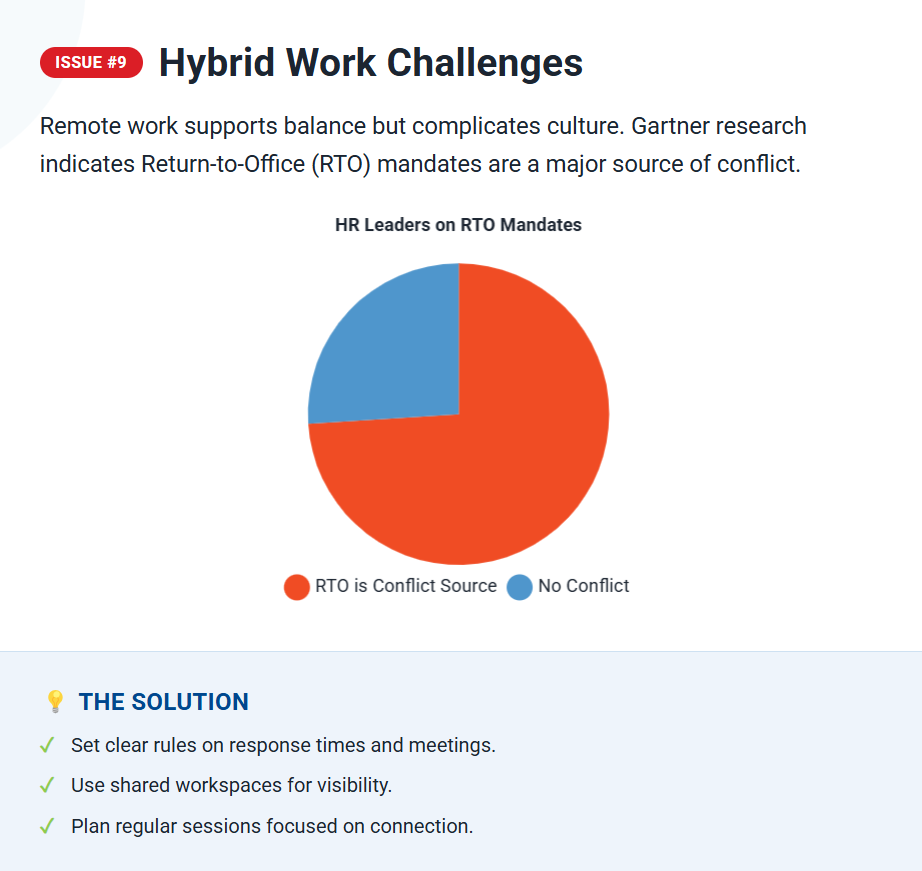
Hybrid and remote work patterns are now standard for many recruiters and candidates. This shift supports work-life balance but can complicate coordination, culture building, and real-time communication. Gartner research indicates that return-to-office mandates are a source of conflict for 74% of HR leaders and can actively drive attrition.
To keep teams aligned:
- Set clear rules on response times, meeting schedules, and communication channels
- Use shared workspaces, call notes, and task boards that everyone can access
- Plan regular virtual or in-person sessions focused on quality, learning, and connection
10. Employer brand and values alignment
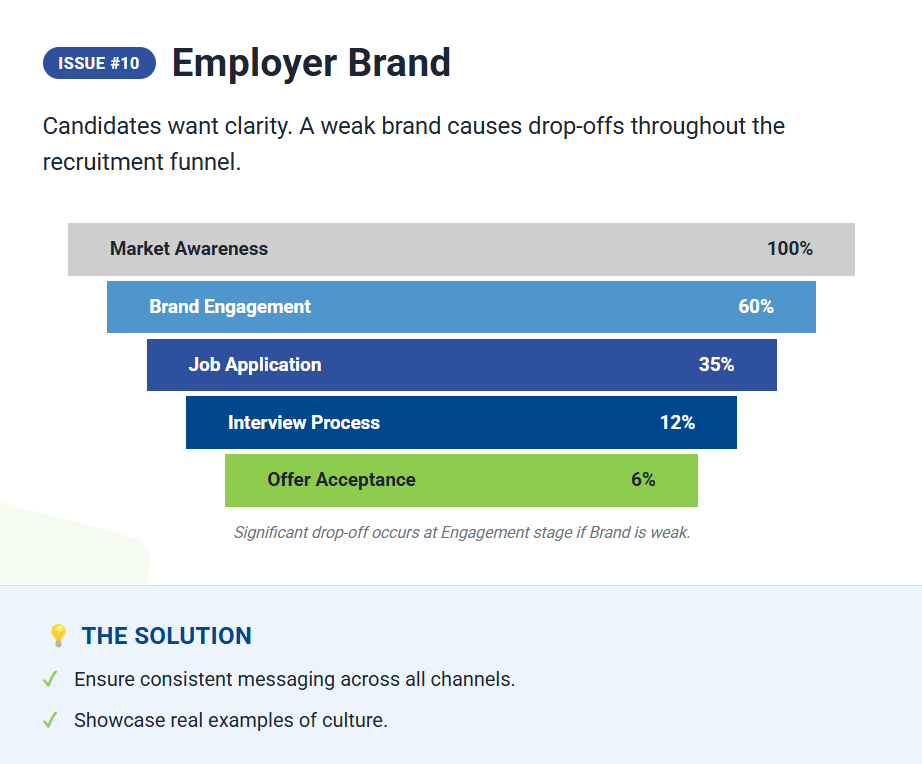
When an employer brand feels vague or out of date, it becomes harder to attract and retain top talent. Candidates want clarity on values, inclusion, career growth, and workplace flexibility. If the stories recruiters share don’t match the day-to-day experience, it feeds ghosting and early exits.
Stronger employer branding includes:
- Consistent messaging across job ads, careers pages, and recruiter conversations
- Real examples of company culture, recognition, and development paths, not just slogans
- Clear communication of DEI, wellbeing, and community initiatives, supported by practical guidance on inclusive staffing strategies
11. Market volatility and workforce forecasting
Economic shifts, sector-specific downturns, and changing client budgets make workforce planning difficult. Recruitment agencies that rely only on intuition or a handful of large clients feel these swings more sharply.
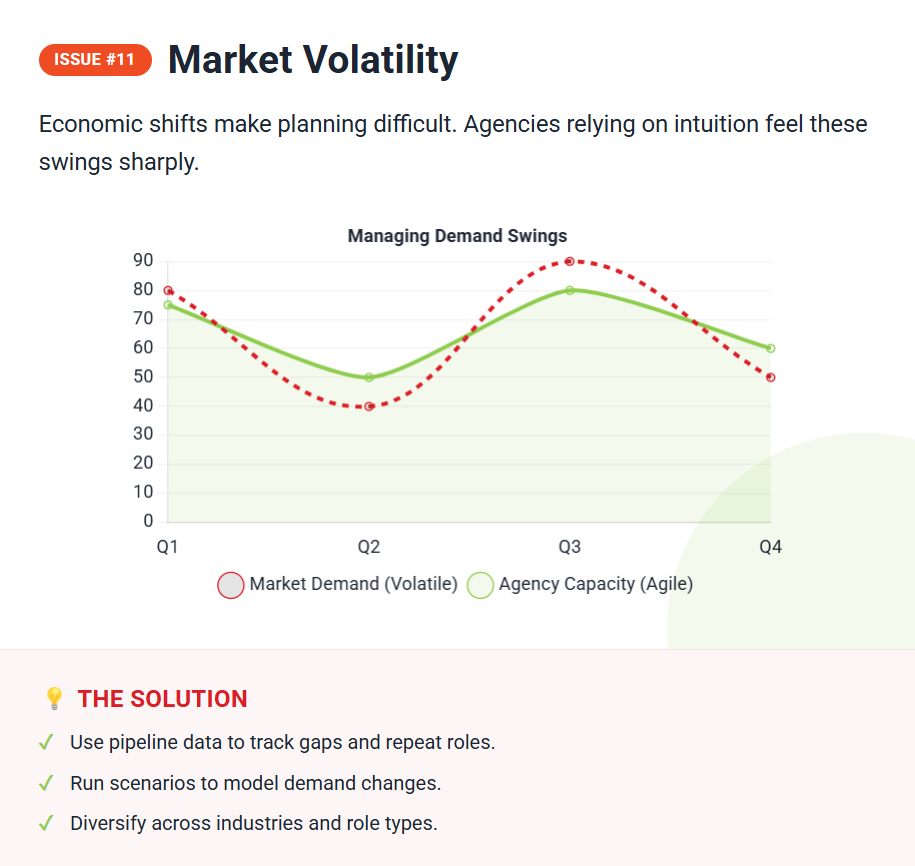
Recruitment teams can build more agile operations by:
- Using pipeline data to track likely placements, gaps, and repeat roles by client
- Running simple scenarios to model demand changes and hiring pauses
- Diversifying across industries, role types, and contract models where feasible
How Tracker simplifies staffing challenges
Tackling these problems at scale needs more than extra effort from recruiters. Tracker gives staffing firms a connected ATS and CRM so candidate, client, and job data live in one place.
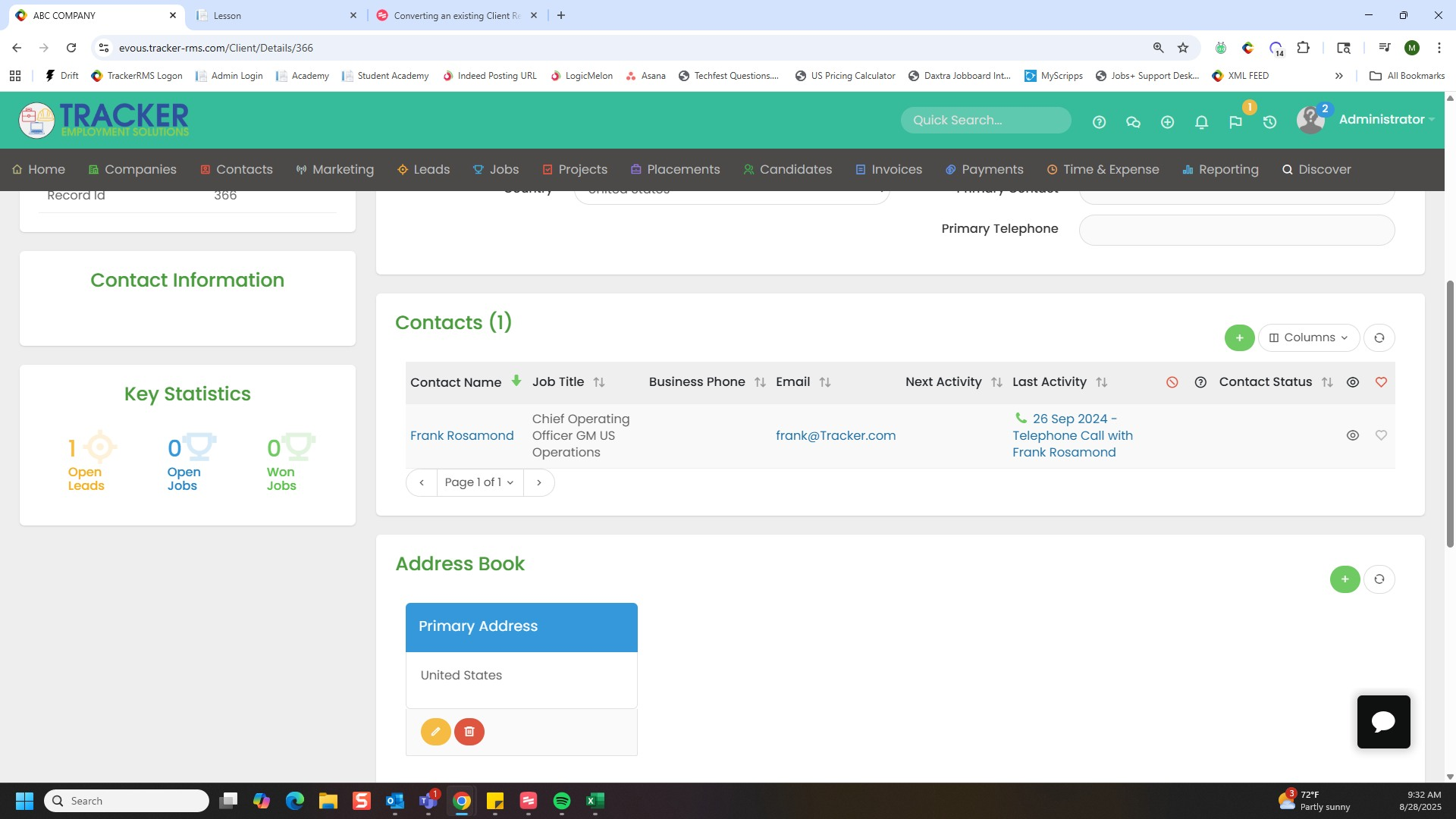
Unified ATS and CRM: Manage job orders, candidate records, submissions, and client activity inside a single platform. This cuts manual updates and reduces errors.
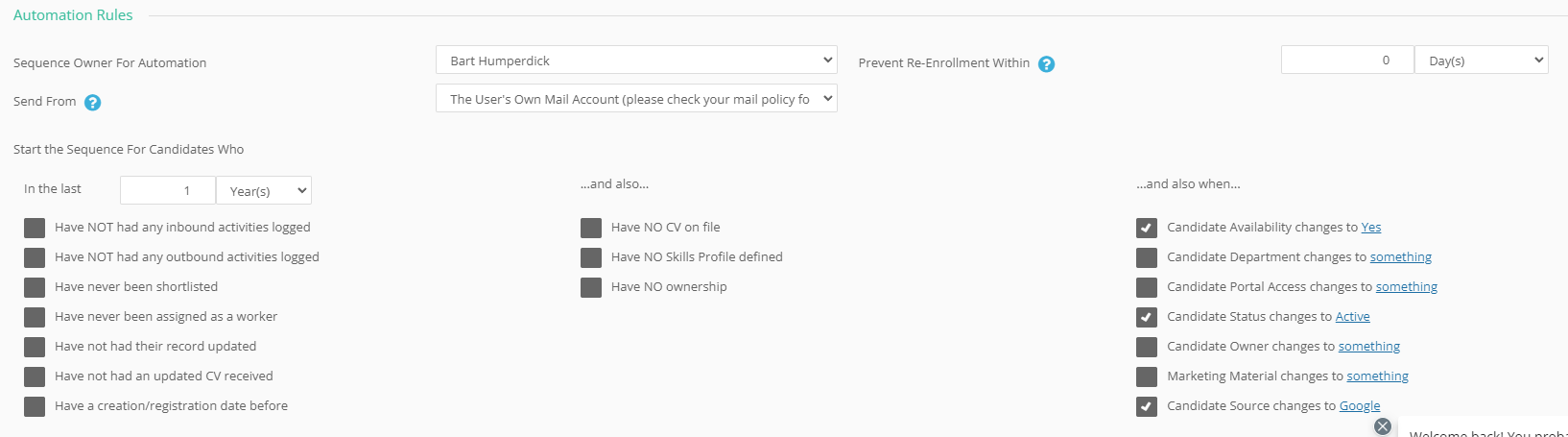
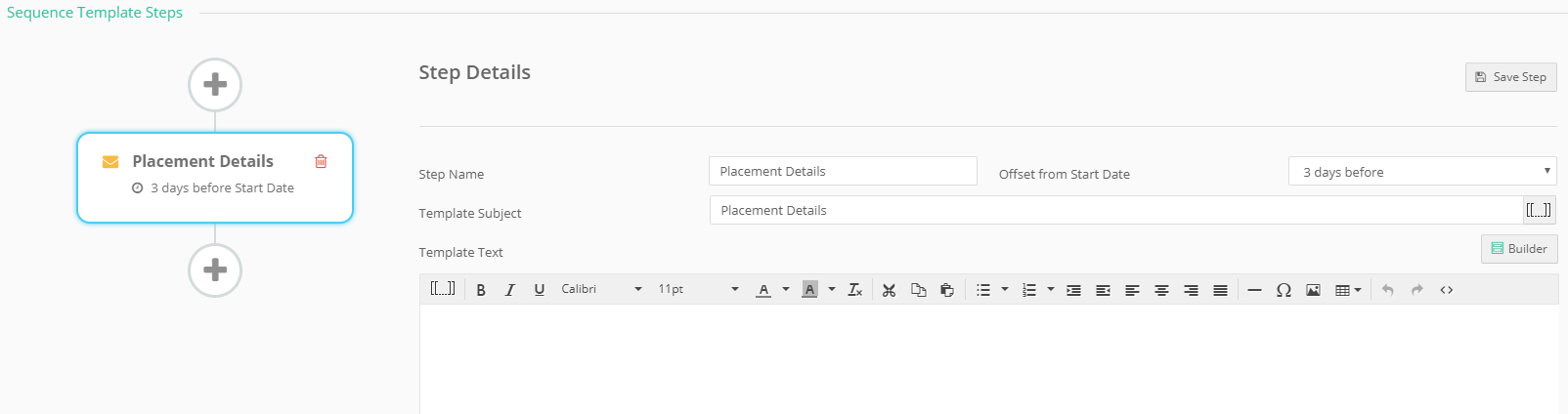
Automation for busy teams: Workflow automation sends follow-ups, updates statuses, and creates tasks, supported by Tracker’s dedicated automation features. Recruiters have more time for conversations.
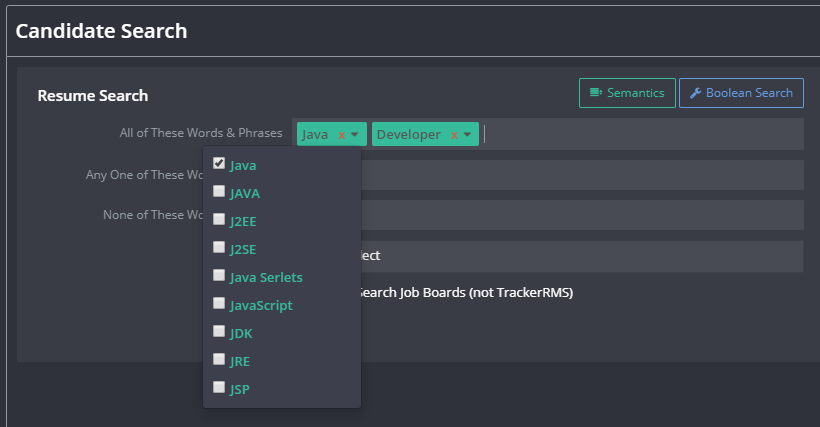
TrackerAI matching and sourcing: AI-powered ranking and matching highlight the best candidates for each role, while job board and sourcing integrations bring applicants straight into Tracker.
Onboarding, compliance, and reporting – Built-in onboarding flows, forms, and compliance tracking help agencies keep candidates ready to start and reduce risk. Dashboards and reports give leaders clear visibility into pipelines, bottlenecks, and team performance.
With these Tracker features working together, staffing agencies can shift from reacting to isolated issues to following a more consistent, process-driven approach to overcoming staffing challenges.
Moving from challenges to continuous improvement
Every staffing agency deals with some mix of the skills gap, turnover, process bottlenecks, and compliance pressure. The teams that keep moving forward treat these not as one-off fires to put out, but as signals to refine how they work.
Over time, this approach builds a more resilient operation, with Tracker as a central platform that supports clearer visibility, faster decisions, and more consistent delivery.
Struggling with staffing challenges that slow your team down?
Tracker brings automation, visibility, and real-time insights into one platform, helping you shift from reactive problem-solving to consistent, process-driven recruitment.
FAQs
Why is staffing so hard right now?
Demand for skilled workers often exceeds supply, candidate expectations keep rising, and hiring cycles remain complex. Agencies must balance tight client timelines, careful candidate screening, and compliance requirements while competing with in-house teams and other recruitment agencies for the same talent.
What factors contribute to staffing problems in the workplace?
Staffing problems grow when there’s a mix of high employee turnover, unclear expectations, weak onboarding, and limited career development. Poor communication between managers and recruiters, slow decision-making, and a lack of workforce planning all add to the risk of staff shortages and disengaged teams.
How can automation improve recruitment processes?
Automation supports recruitment teams by handling repeatable tasks. This reduces manual work, cuts errors, and keeps candidates informed. Recruiters then have more time to qualify talent, advise clients, and work on strategic improvements to the overall process.