
The era of “we sell it, you implement it” is over in staffing technology
That’s not a prediction. Research and industry data tell a consistent story: staffing firms are moving away from transactional vendor relationships, and the ones pulling ahead are demanding something fundamentally different. The signal came through loud and clear at SIA’s Executive Forum North America, where senior leaders confirmed what the data has been showing for years. Handing over a platform with a few training sessions and a go-live date is no longer enough. The vendors who haven’t adapted are losing business to the ones who have.
Understanding where the standard has moved, and why it moved there, matters for any staffing firm evaluating, renewing, or reconsidering its technology partnerships right now.
What staffing firms are done tolerating with ATS implementations
To understand what good looks like, it helps to start with what isn’t working. The research is consistent, and so is the feedback from staffing leaders across the industry.
Black box implementations. Staffing firms investing significant budget in a platform need to understand how it works, where it’s falling short, and what the roadmap looks like. When information only flows in one direction and there’s little visibility into how decisions get made, frustration builds fast. Opacity kills the internal confidence required to drive adoption, and without adoption, even the best ATS is just an expensive line item.
Generic playbooks. According to Gartner, nearly 50% of ATS implementations underperform due to adoption and process issues, and most failures stem from weak planning rather than bad software. A significant portion of that weak planning comes from vendors applying the same implementation approach to every client regardless of team size, workflow maturity, or change management capacity. What works for a 200-person firm with a dedicated IT team doesn’t work for a 40-person firm where the ops manager is running the rollout. These aren’t the same situation and treating them that way shows.
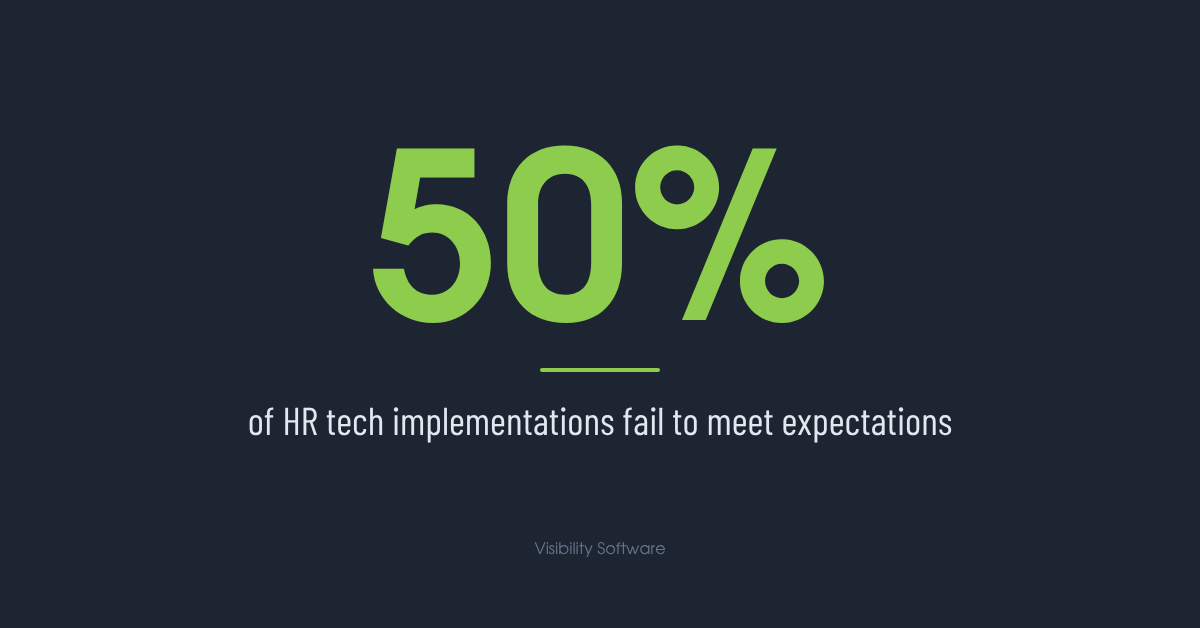
More than 50% of HR tech implementations fail to meet expectations, and disappearing after go-live is one of the biggest reasons why. Vendors often manage the launch well and then step back just as the real challenges surface: edge cases the training didn’t cover, recruiter resistance that wasn’t anticipated, workflow gaps that only become visible under real-world conditions. The first 90 days post go-live are critical. Staffing firms left to navigate that period alone don’t forget it.
Think of it like hiring a personal trainer who hands you a printed workout plan on day one and then never shows up again. You paid for results, not paper. Your technology vendor relationship should work exactly the same way.
What true partnership actually looks like
Industry research points to the same three things staffing firms are looking for: shared accountability, genuine transparency, and implementation that’s built around the client rather than the vendor’s convenience.
Shared KPIs and outcomes-based commercial models
91% of B2B buyers expect at least some level of personalization during the purchasing process, and in enterprise software, that personalization starts with being held to the outcomes that matter to that specific client. Staffing firms want success defined before implementation begins, not after it ends. That means shared KPIs tied to real business outcomes, SLAs with actual teeth, and commercial models that create mutual skin in the game.
Co-designed implementation plans for staffing agencies
Rollout plans should be built around the client’s current state, team, and workflows rather than pulled off a shelf. That means assessing change management capacity before scope is finalized, sequencing the rollout based on where the firm actually is, and building in flexibility for the inevitable adjustments that real-world implementation always requires. One size does not fit all here.
Joint ownership of change management
This is where the gap between vendor and true partner is most visible. Research shows that 56% of staffing leaders cite internal adoption and change management as their top technology challenge. A vendor who treats change management as a checklist item to hand off isn’t a partner. A true partner has an active stake in solving that problem alongside you, because if your team doesn’t adopt the platform, the implementation didn’t succeed regardless of what the contract says.
Continuous feedback loops post-launch
Joint retrospectives, regular check-ins tied to adoption data, and structured feedback channels that go both directions. Not just a support ticket system. An ongoing conversation about what’s working, what isn’t, and what needs to change.
The co-design advantage in staffing technology implementation
The data on early involvement is consistent across studies. Staffing firms that participate in vendor product development, beta programs, or co-design initiatives consistently report stronger adoption outcomes than those who receive a finished product and are expected to adapt to it.
Early involvement builds advocacy before broad rollout begins. When a team member has helped shape how a tool works, they have ownership over it. That ownership translates into the kind of internal credibility that no external vendor communication can replicate, and it’s exactly the credibility that makes adoption stick.
It also surfaces friction before it becomes a problem. Firms involved in testing and feedback loops identify workflow gaps, edge cases, and adoption risks early when they’re inexpensive to address. That’s a very different position from discovering the same issues after a rollout has already gone sideways.

What to look for when evaluating a staffing technology partner
The shift from vendor to partner doesn’t happen by accident. It starts in the evaluation process. Here are the questions that separate vendors from genuine partners.
- Are their commercial terms tied to outcomes or just delivery? Milestone-based billing with no connection to actual adoption or ROI is a signal that accountability ends at go-live.
- Can they show you results from firms at your current stage of maturity? Not just marquee case studies from their largest clients. Evidence that their approach works for firms with your team size, your workflow complexity, and your change management capacity.
- Do they offer flexibility or just packages? 74% of staffing executives identified technology as a key differentiator for their firms, which means the ability to adapt a technology partnership as priorities evolve matters as much as the initial fit.
- What does support look like 6 months after go-live? If the answer is a help desk and a knowledge base, that’s a vendor. If the answer involves ongoing success management, adoption reviews, and access to expertise when you need it, that’s a partner.
The bottom line
Your technology partner should be as invested in your adoption as you are. Not because it’s good customer service. Because a platform that doesn’t get adopted doesn’t deliver ROI, and a vendor whose clients don’t see ROI doesn’t have a sustainable business. The incentives should be aligned.
The firms getting the most from their technology investments in 2026 aren’t just running better software. They’re working with better partners.
Tracker is built around the belief that implementation doesn’t end at go-live. From co-designed rollout plans to ongoing adoption support, we work alongside your team at every stage — because the right staffing platform only delivers value when your people are actually using it.