
A New Zealand staffing and recruitment agency running five branches on a patchwork of disconnected tools replaced it all with one platform. The result: thousands saved, no added headcount, and a business that kept growing through a tough market.
Enterprise Recruitment at a glance
| Industry | Labor hire and permanent recruitment across trades, manufacturing, transport & logistics, finance & accounting, admin, call centre, and HR |
| Headquarters | New Zealand |
| Branches | 5 branches |
| Years in business | 50+ years |
| Tracker products used | ATS/CRM, Onboarding, Automation, Texting, Shift Management, AI, and Marketing |
| 8 systems consolidated into one platform | 2 workflows running in parallel (temp/labor hire + permanent placement) in a single system | $10k’s saved annually in tech costs | 0 headcount added to keep up with company growth, since Tracker absorbed that workload |
Running a complex operation across multiple divisions
When Ian McPherson evaluates a technology decision, he’s not looking for a product that looks good in a demo. He’s looking for one that holds up in the real world: high volume labor hire across multiple branches, 24/7 shift operations, and a permanent recruitment division that demands an entirely different kind of workflow. All needed to support a multitude of industries including trades and services, manufacturing and operations, transport and logistics, finance and accounting, administration and office support, call centre and customer services, HR and recruitment, and more.
As COO, Ian has spent the last 26 years making sure Enterprise Recruitment’s operation runs. The New Zealand-owned staffing and recruitment agency has been in the market for over 50 years, and his business partner, as he puts it, makes it rain. Ian builds the gutters.
Tracker is now a big part of how he does that.
A legacy system that wasn’t broken but had a ceiling
Before Tracker, Enterprise Recruitment ran its operation on Access and RDB, propped up by five or six third-party integrations covering everything from document signing to rostering to analytics.
“It wasn’t slowing us down much, but it wasn’t speeding us up either,” Ian says.
The deeper problem was structural. Every integration created a seam in the workflow — another vendor to manage, another place for things to fall through, another conversation about who was responsible when something went wrong. The team was spending just as much time managing the technology as they were using it.
When Enterprise decided to start evaluating their options, what they found in the market didn’t inspire confidence. Most alternatives had the same fundamental problem: a core product that needed to be built with plug-ins to handle the full workflow.
“When something goes wrong, you’re stuck in the middle,” Ian says. “Who actually takes responsibility for it?”
Challenges
- Running a large labor hire and permanent placement operation across five branches on server-based recruitment software that was being wound down
- Managing five to six third-party integrations for document signing, rostering, marketing, and analytics — with no single owner when things went wrong
- Administrative overhead required to keep data moving between disconnected systems
- No visibility into true margin across multiple cost types
- Candidate compliance gaps creating placement risk across large volume clients
- Reporting for major clients required pulling data from multiple sources manually
The case for having an all-in-one recruitment platform
Tracker came onto Enterprise’s radar through a trusted introduction in 2024. Enterprise had been planning a platform migration for 2025, but when the team sat down to demo Tracker, the timeline moved up.
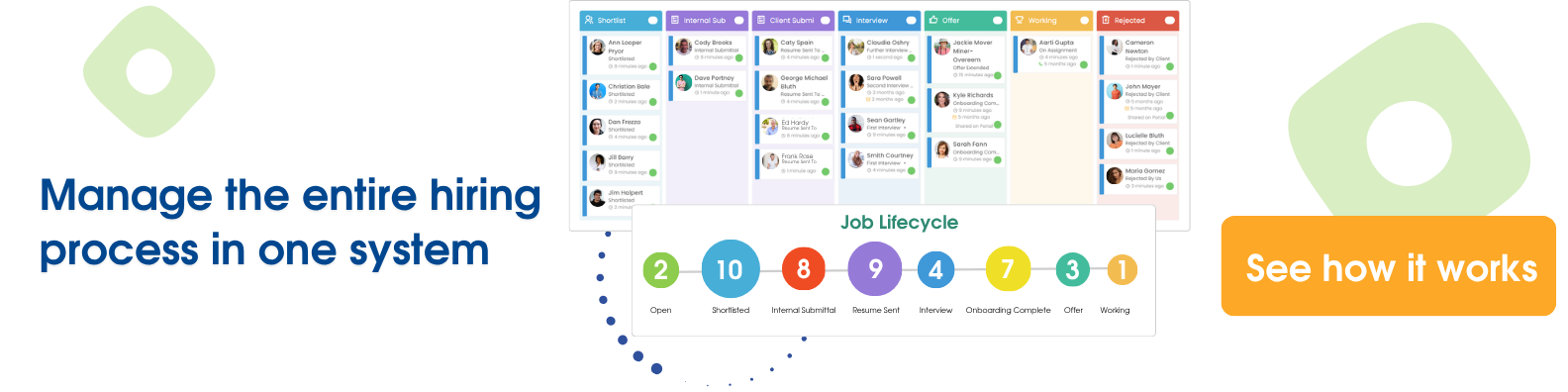
The reason was straightforward. For the first time, Enterprise could see their entire workflow — ATS and CRM, onboarding, shift management, marketing, automation, compliance — running inside a single platform, without plug-ins.
“When we looked at Tracker we could see that, other than our existing payroll software, everything to run our business was there,” Ian says.
That wasn’t something any of the alternatives could offer. And for a COO whose job is to build efficient systems, it changed the story entirely.
Solutions
- Replaced most third-party tools with Tracker as their single recruitment platform covering ATS/CRM, onboarding, shift management, marketing, automation, texting, and video communications
- Implemented client- and region-specific compliance rules to prevent non-compliant candidate placements
- Deployed a shift planner for high volume clients with fluctuating demand patterns
- Automated candidate and client reengagement workflows through Tracker’s marketing and automation tools
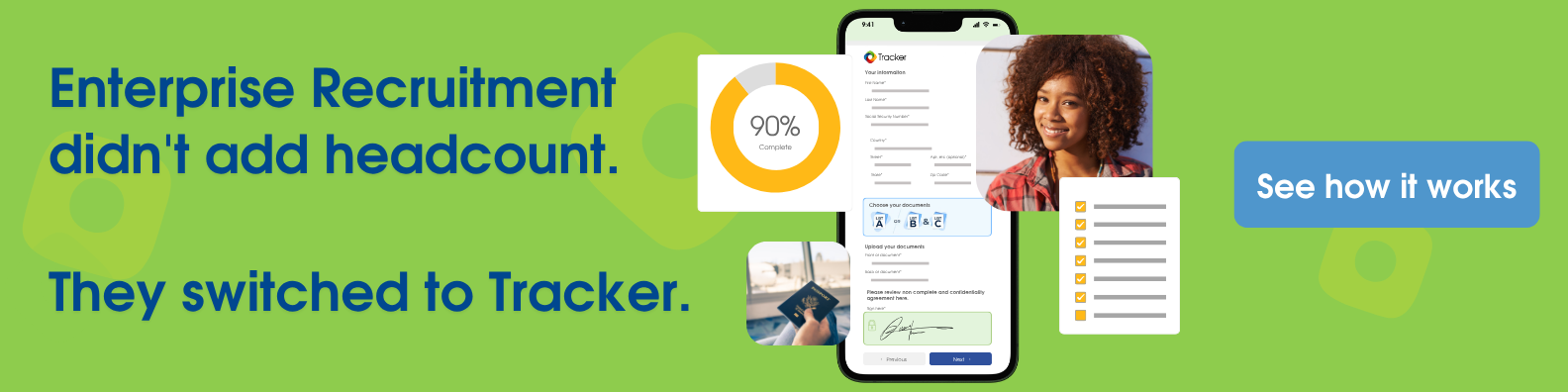
- Enabled real-time onboarding via mobile, eliminating paper-based processes and third-party signing costs
- Used task and activity tracking to give managers visibility into recruiter pipeline and business development activity
- Ability to run permanent placement and temp recruitment processes in one system
The results: thousands of dollars saved and headcount they didn’t need to replace
The financial impact started immediately. Products Enterprise had been paying for separately including document signing, marketing tools, and rostering solutions, could be switched off. The savings ran into thousands of dollars.
But the more significant shift was operational. As administrative staff moved on naturally, Enterprise didn’t need to replace them. The work they’d been doing to manage integrations and keep data moving between systems had been absorbed into the platform.
“We didn’t strategically remove headcount,” Ian explains. “When back-office employees left organically, we didn’t need to replace them because of Tracker.”
In addition, Tracker’s onboarding module alone moved the needle. Previously, Enterprise relied on a third-party tool plugged into their system to manage candidate onboarding. A process that carried a cost per use and required manual effort to get data where it needed to go. With Tracker, that cost disappeared, and the process became faster and cleaner for both recruiters and candidates.
Paper volumes also dropped significantly. Recruiters who previously relied on scanning and manual data entry were completing onboarding directly in the platform, on their phones, in real time.
“Has Tracker’s onboarding been a game changer? It has to be honest,” Ian says.
Running labor hire complexity at scale
For Enterprise, efficiency gains weren’t just about cutting costs. They were about to be able to handle operational complexity that would have been unmanageable with their old setup.
The shift planner is now central to how they manage high-volume labor hire clients, particularly those running 24/7 operations with fluctuating demand. Client-specific compliance rules mean that no candidate can be placed with a client until they’ve completed the required inductions, removing a genuine liability risk across a high-volume workforce .
“There’s always a risk of candidates getting through without the right inductions completed. Tracker stops that. Our recruiters can’t place anyone with a client until specific requirements are met. That removes a significant liability for the business.”
Reporting that used to require pulling data from multiple sources can now be produced quickly and accurately. For Enterprise’s larger clients on regular reporting cycles, that’s a meaningful change and one that’s strengthened those relationships.
The same platform also supports Enterprise’s permanent recruitment division, where recruiters partner with local organisations to place skilled workers across countless industries. The workflow is different; the pace is different, and the screening process is more involved, but it all runs in Tracker.
Growing a recruitment agency through a tough market
None of this happened in ideal conditions. The last two years have seen real pressure on margins across the recruitment industry, and New Zealand has been no exception. Enterprise held their staffing levels, protected their margins, and continued to grow without adding headcount or layering on additional technology costs.
When new hires join Enterprise today, the feedback on Tracker is consistent.
“When people experienced Tracker for the first time, the feedback has been universally great,” Ian says. “Much better in comparison to what they have used before.”
For Ian, that external validation matters. When you’re inside a system every day, it’s easy to lose perspective. Hearing it confirmed by people coming in from other platforms is a signal that the decision held up.
Outcomes
- Reduced technology costs by tens of thousands annually by eliminating third-party tools
- Absorbed back-office workload without replacing departing administrative staff
- Achieved measurable margin improvement through multi-layered cost tracking inside Tracker
- Eliminated candidate placement compliance risk across all clients
- Reduced paper and scanning volumes significantly across all five branches
- Grew the business through a tough market without adding headcount or technology costs
- New hires consistently report Tracker as superior to platforms used at previous employers
What continued support and partnership should look like
Ian is direct about what he expects from a recruitment technology partner after go-live: don’t disappear.
Tracker’s customer success team, throughout the implementation and beyond, has stayed available. They are consistently answering questions, checking in, and helping Enterprise get more out of the platform over time.
“They haven’t forgotten about us after going live,” Ian says. “They’ve been really invested in making sure we’re getting the most out of the product.”
The product investment matters too. Regular updates, a clear AI roadmap, and ongoing development give Ian confidence that Tracker is a platform Enterprise can build on, not one they’ll outgrow.
“There’s nothing in the market that is as easy as Tracker.”
What’s next for Enterprise Recruitment and Tracker
Enterprise is now turning its attention to time capture through Tracker, deeper automation across their workflows, and a ground-up review of their onboarding process, this time built around the platform’s full capability rather than carried over from their previous system.
For Ian, the next phase is about getting even more out of what’s already there. That’s a different kind of problem to have.