Ask a healthcare staffing recruiter and an IT staffing recruiter how AI shows up in their day, and you will get two different answers. One is racing to verify a nurse’s license before a shift starts. The other is scanning a stack of resumes for a skill that barely existed two years ago. AI in the recruitment process is not a single tool. It bends to fit whatever the agency actually needs.
This piece looks at how AI in recruitment plays out across three corners of the staffing world: healthcare, IT and professional staffing, and high-volume operational roles. Each vertical treats AI in job recruitment on its own terms, shaped by what actually matters to their clients and candidates. Recognizing those differences beats chasing a single playbook for AI adoption.
What is AI in recruitment?
AI in recruitment applies machine learning, natural language processing, and other AI tools to hiring tasks: sourcing, screening, candidate communication, and matching. Traditional recruiting software follows fixed rules. AI systems learn from data and adjust their recommendations as more information comes in.
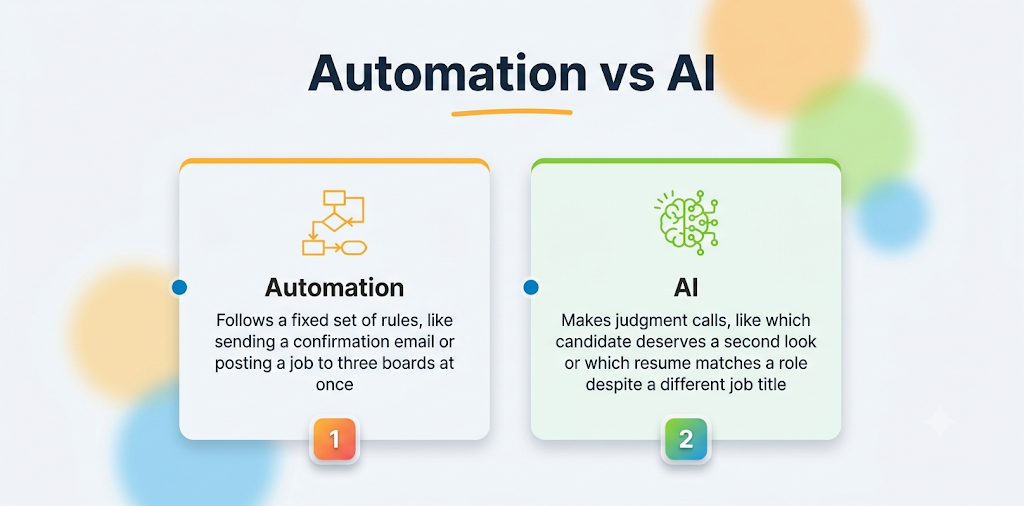
That distinction matters when agencies talk about automation and AI as if they are the same thing. Automation follows a set path: send this email when a candidate applies, post this job to three boards at once. AI makes judgment calls: which candidate deserves a second look, which resume matches a role despite different job titles, and which message will actually get a response. Comparing AI and automation side by side makes it easier for agencies to figure out where each technology fits in their own recruiting software stack.
How is AI used in the recruitment process?
The honest answer depends on the agency. AI already shows up across HR and recruiting in a handful of categories: screening, matching, communication, and reducing bias.
How those categories get applied changes based on the roles being filled. Here is what that looks like for three distinct staffing verticals.
Healthcare staffing
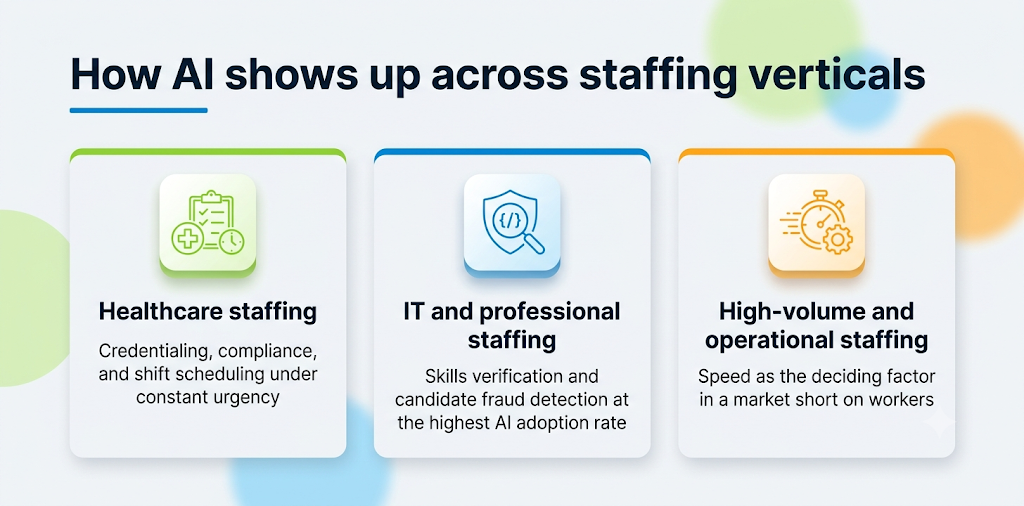
Healthcare staffing runs on urgency. The industry faces a 2026 shortage of 84,930 physicians, 250,710 registered nurses, and 81,330 licensed practical nurses, with shortages projected to continue through 2038. That kind of gap changes what recruiters need from their technology:
- Credentialing and compliance checks that used to take days now run through AI-powered verification, cutting the time between a candidate’s application and their first shift
- Automated reminders and conversational tools keep candidates engaged between the offer and the start date, the exact window where healthcare staffing firms lose people to competing offers
- Voice AI and conversational assistants handle these touchpoints without adding headcount, which matters given how thin healthcare staffing margins already run
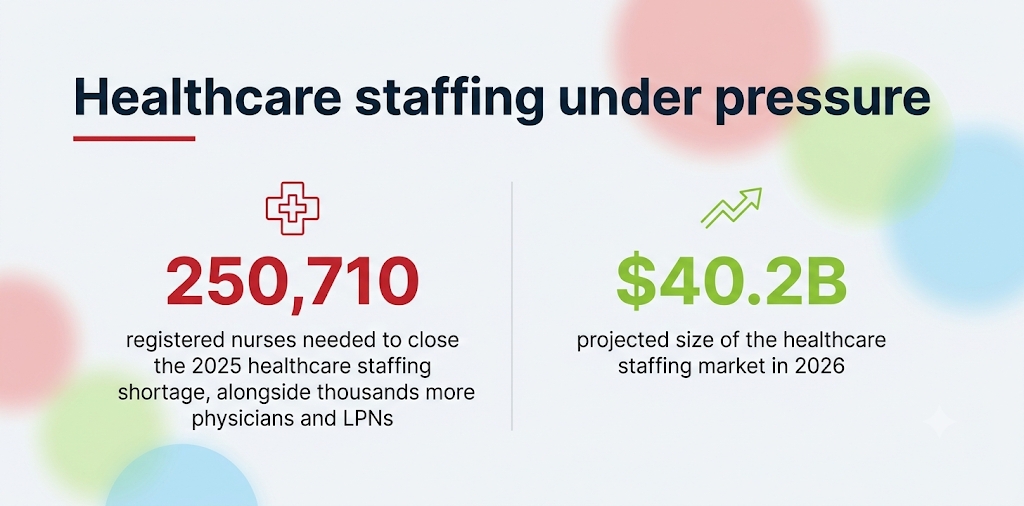
The healthcare staffing market is projected to return to 2% growth in 2026, reaching $40.2 billion, with locum tenens roles growing even faster. Firms that build AI into credentialing and scheduling now are positioning themselves to capture that growth instead of losing candidates to slower processes.
IT and professional staffing
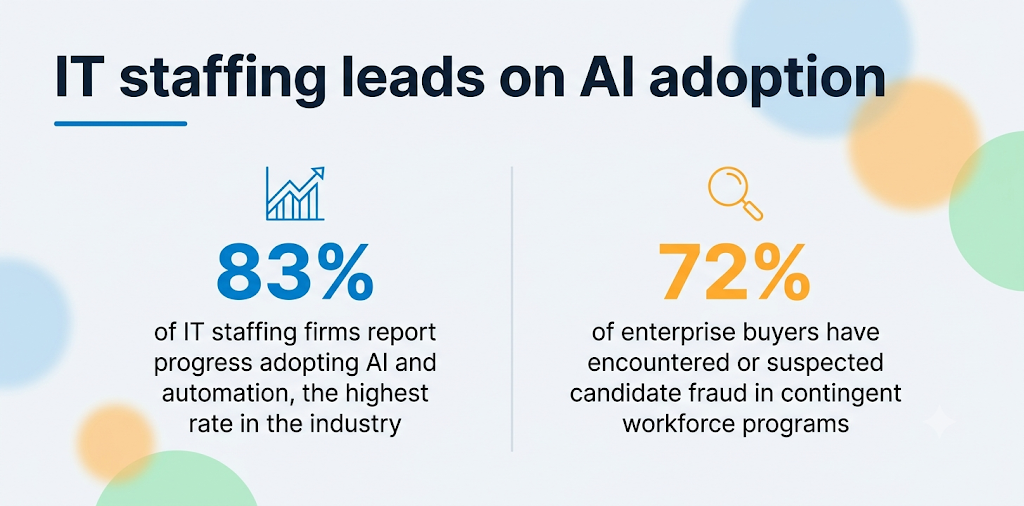
IT and professional staffing leads every other segment when it comes to AI adoption. 83% of IT staffing firms report progress adopting AI and automation, the highest rate across the entire staffing industry. That adoption tracks with a real problem: verifying that a candidate’s skills match what is on their resume.
- Candidate fraud has become a genuine headache in this space, with 72% of enterprise buyers encountering or suspecting fraud somewhere in their contingent workforce programs
- AI-powered skills-based matching helps catch these gaps before a candidate reaches an interview, comparing what someone claims against what their actual work history supports
- AI sourcing tools that scan for semantic matches rather than exact keyword hits are becoming standard for exactly this reason
Elevation Recruitment Group put this to work directly. Their team uses AI to search for transferable skills instead of matching job titles alone, and a CV comparison feature flags gaps between a candidate’s resume and what a role actually requires. Clients increasingly come to them tired of interviewing candidates whose AI-polished resumes do not match their real experience.
High-volume and operational staffing
High-volume staffing, think light industrial, warehouse, and other high-turnover roles, runs on a different problem than healthcare or IT: not enough workers to go around. Manufacturers alone could need as many as 3.8 million new employees between 2024 and 2033, with 1.9 million of those roles potentially going unfilled if the talent gap does not close. In a market that tight, every candidate who applies is likely fielding offers from several other employers at the same time, which makes speed the deciding factor. AI and automation working together on the repetitive parts of screening and scheduling let a recruiter reach a candidate and confirm a shift before a competitor does.
DealerFlex shows what that speed looks like in practice, messaging 54 candidates and booking 7 interview slots in 15 minutes on the way to a 100% weekly fill rate. Whatever the vertical, that kind of speed depends on having the right tools built into a recruiter’s daily workflow from the start.
TrackerAI features built for every staffing vertical
Every workflow above needs specific tools, not a generic AI layer bolted onto an ATS. TrackerAI supports staffing teams with:
- An AI ranking engine that scores candidates against a role using past placement success, client fit, and recruiter feedback
- Compounding agents that build on each other’s output — Agents such as Resume Reformat, Resume Scrubber, Candidate Headline, and Screening can chain together, so whens someone gets shortlisted, they automatically run and each step feeds the next instead of running as isolated one-off tools
- Candidate summaries that let a recruiter scan a profile in seconds instead of reading a full resume top to bottom
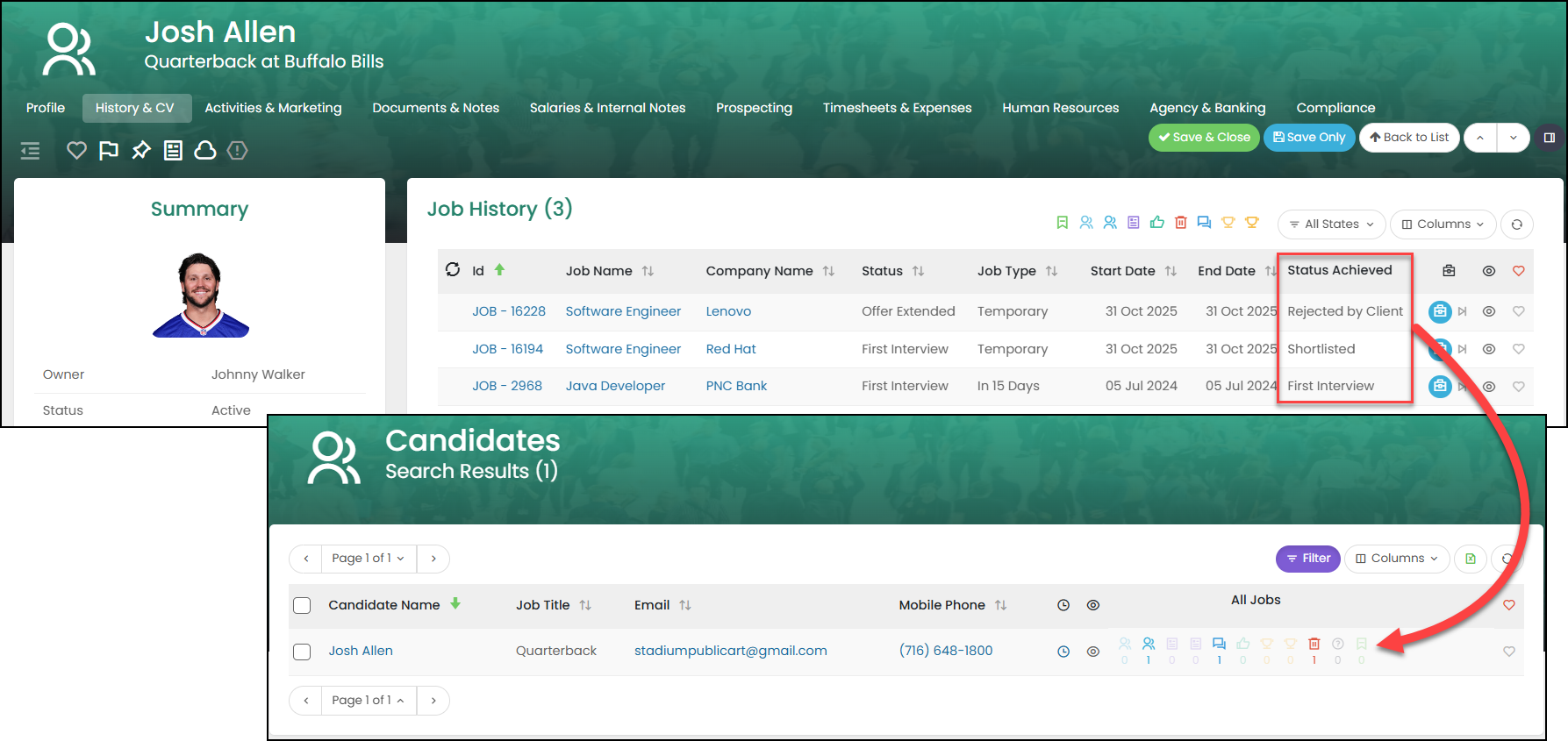
- Interview prep that compares a candidate’s resume, cover letter, and the job description to surface strengths and gaps before the conversation starts
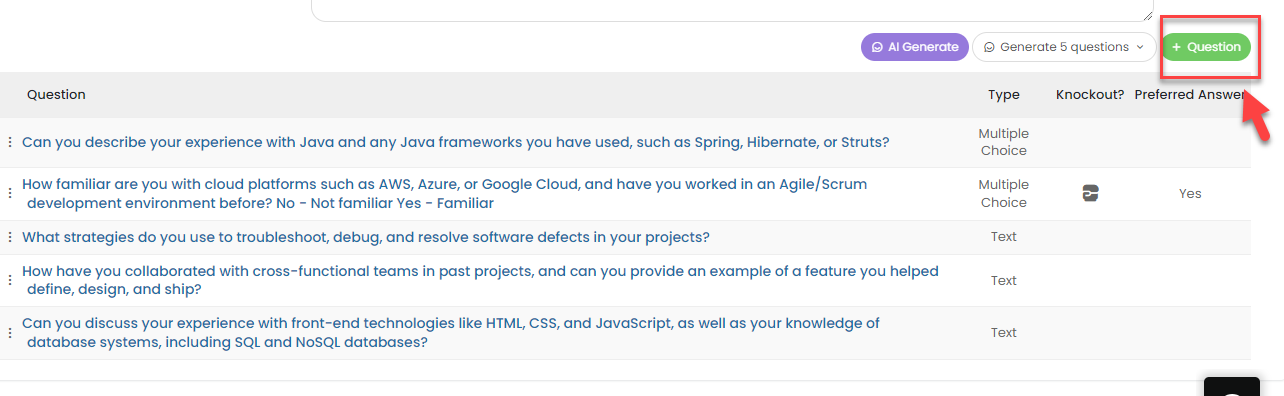
- Targeted screening questions generated around the specific role or candidate
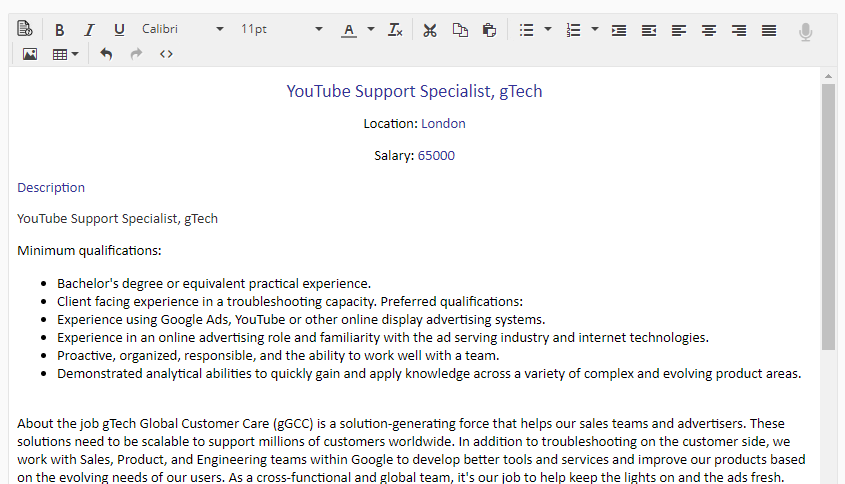
- Generative AI drafting for job descriptions, outreach emails, texts, and WhatsApp messages
- Resume reformatting that turns a candidate’s document into something client-ready
- EVA – Your natural language AI assistant that’s inside of Tracker with you
Automation still covers the repetitive groundwork: status updates and workflow triggers that used to eat up a recruiter’s morning. AI builds on that with the judgment calls: who to rank higher, what to ask, what to say next. None of this replaces recruiter judgment, and it is not meant to. Human judgment still plays the deciding role in whether a candidate is the right fit for a client’s team, their culture, and their long-term goals.
Conclusion: Put AI to work across your recruitment process
AI in the recruitment process is not a single strategy that works the same way for every staffing firm. What works for a healthcare staffing team chasing credentialing speed looks completely different from what an IT recruiter needs to catch skills mismatches, and both differ again from the speed and scarcity pressure driving high-volume placements.
The agencies getting the most from AI are not the ones adopting every tool available. They are the ones matching the right AI capability to the specific vertical, workflow, and pressure point that actually needs it. The question worth asking is not whether to adopt AI, but where in your own recruitment process it would actually move the needle.
See what a rollout of AI in your hiring process could look like, then request a demo to find out where AI can make the biggest difference for your team.