A recruiter drafting a job posting used to start from a blank page. Now they start from an AI-generated draft and edit from there. That small shift shows up across the hiring process, from screening resumes to forecasting which candidates a client will need next quarter.
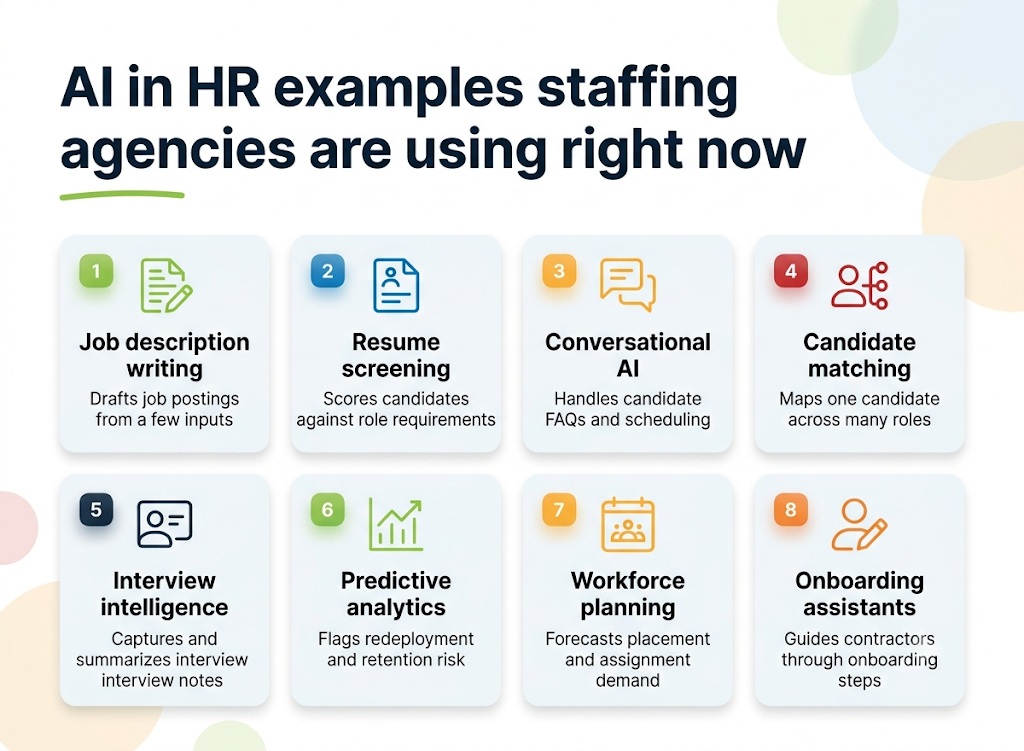
These aren’t hypothetical use cases. Many of these AI capabilities have been part of recruiting for a while, and newer technologies are emerging with the potential to reshape it further. These examples of AI in HR break down into two parts: eight built specifically for staffing agencies placing and redeploying candidates and contractors, and five that cover capabilities recruitment firms can apply directly or share with their clients as a value-add.
AI in HR examples staffing agencies are using right now
Staffing agencies juggle candidate pools, client requisitions, and placement cycles that look nothing like a single company’s hiring process. The examples below give the specifics behind the broader case for why AI adoption matters in staffing right now, each one grounded in what agencies are actually using rather than a hypothetical use case.
1. AI-powered job description writing
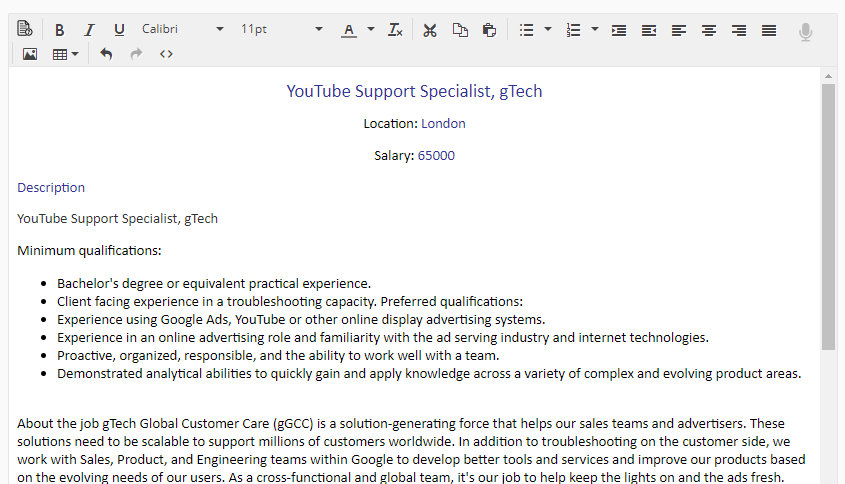
Generative AI tools draft job postings from a handful of inputs, and recruiters still edit the output before it goes live. Starting from a draft instead of a blank page matters more for staffing agencies than a single in-house team, since a recruiter may be writing job ads across a dozen open requisitions in several different industries during the same week, each with its own tone and requirements.
The share of job postings mentioning generative AI has climbed sharply over the past year, a sign that this shift in how job ads get written is not a passing trend.
2. AI resume screening and candidate scoring
AI parses resumes and scores candidates against job requirements, going well beyond the keyword matching older applicant tracking systems relied on. For agencies handling high applicant volume, this shows up in a few concrete ways:
- Screening speed directly affects how fast a client gets a shortlist
- Choosing the right AI recruiting tools for screening carries more weight than picking one for lower-volume tasks
- Fairness needs regular review, since federal guidance already addresses how algorithmic hiring tools intersect with anti-discrimination law
3. Conversational AI for recruiting
Chatbots and AI assistants now handle candidate FAQs, scheduling, and early screening conversations. This is different from a scripted chatbot that only recognizes exact phrases, which is automation, not AI. Conversational AI uses natural language processing to understand varied candidate input, closing the gap for a recruiter juggling five open roles who cannot always answer every candidate message within the hour, without adding headcount.
4. AI candidate matching
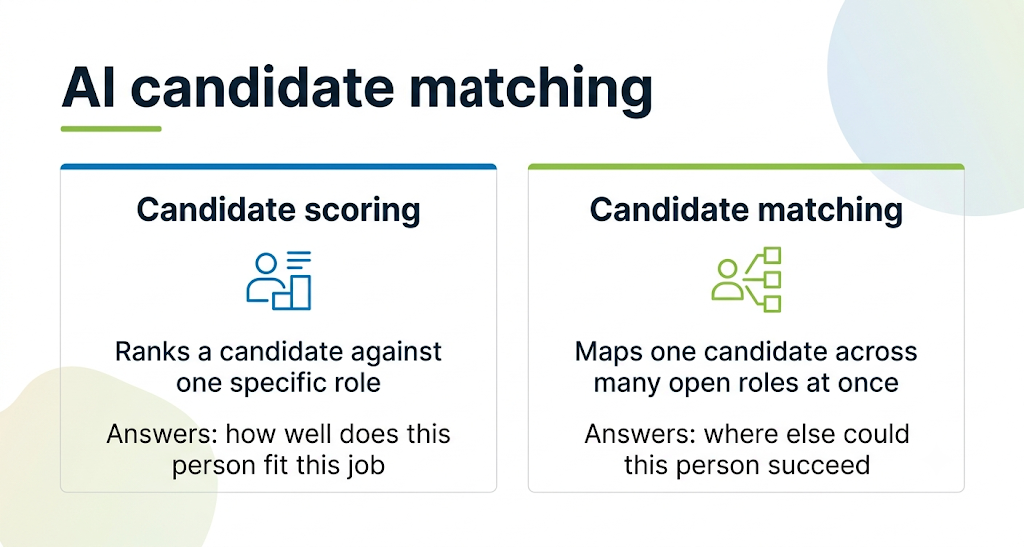
Matching goes a step beyond scoring:
- Scoring ranks a candidate against one specific role
- Matching maps a single candidate across multiple potential client openings at once, and resurfaces a strong past candidate for a brand-new role, since agencies maintain candidate pools across placements, not a single applicant tracking cycle
This is core to how staffing agencies actually work, and matching accuracy depends heavily on what feeds it. AI sourcing tools that build stronger, better-organized candidate pools make every downstream match more useful.
5. AI interview intelligence
AI notetaking during interviews captures and summarizes candidate responses, freeing recruiters from typing while they should be listening. This stays narrow by design:
- It covers notetaking during the interview itself
- It does not cover automated interview scoring or competency mapping, since that broader claim isn’t yet backed by what’s actually validated in the market
For recruiters running back-to-back candidate screens across multiple client searches, accurate and searchable interview notes matter more than they might seem to at first. Recruiter judgment still drives the actual hiring decision, and AI notetaking exists to support that judgment, not replace it.
6. Predictive people analytics for contractor redeployment and client retention
Predictive analytics surfaces patterns in workforce data such as flight risk, attrition indicators, and engagement signals. For staffing agencies, this plays out in two specific ways:
- Flagging which contractors are nearing the end of an assignment so recruiters can line up a new placement before that person exits the pipeline
- Surfacing account-level patterns that signal a client relationship might be at risk
Both use trade on the same underlying idea: seeing a problem early is worth more than reacting to it after the fact.
7. Predictive workforce and placement planning
This is forecasting applied specifically to placement and assignment demand:
- Anticipating client demand cycles before a requisition actually lands
- Building candidate pipelines ahead of when a role opens
AI staffing tools that build this kind of forecasting into daily workflows let agencies start sourcing before a client has even submitted the job order.
8. AI onboarding assistants for candidates and contractors
AI tools guide new hires and contractors through onboarding steps, paperwork, and common early questions. This matters most where onboarding repeats at volume: staffing agencies onboard contractors repeatedly, often across multiple clients at once, so a consistent AI-guided flow cuts the administrative load that comes with onboarding one person at a time, over and over again.
The five capabilities below extend beyond day-to-day placement work. Some apply directly to how recruitment firms manage their own candidate pipelines. Others are worth sharing with clients, particularly those managing in-house teams, as part of a broader strategic conversation.

9. AI-powered candidate self-service
AI assistants or candidate portals let candidates get quick answers to application status, next steps, and onboarding questions without waiting on a recruiter to respond. For staffing agencies managing high volumes of contractors and candidates, this closes the communication gap without adding headcount.
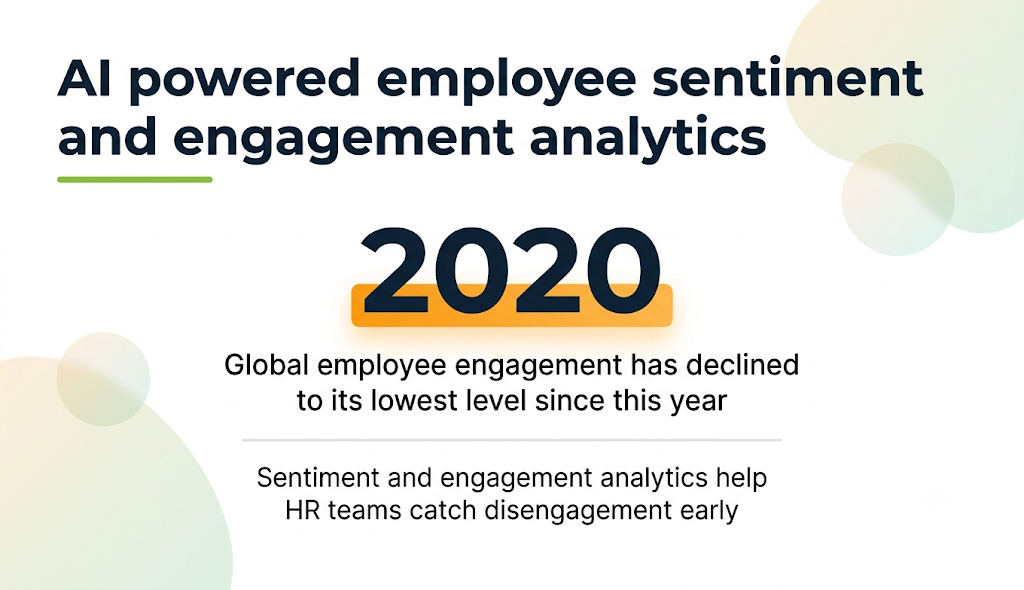
10. AI-powered candidate sentiment and engagement analytics
AI tools analyze candidate data such as response patterns and engagement signals to gauge interest and flag drop-off risk over time. This kind of analytics matters most when a candidate goes quiet between offer and start date, giving recruiters a reason to reach out before the placement falls through.
11. AI-powered internal talent matching
Instead of sourcing new candidates for every open role, this AI resurfaces existing candidates from the database and matches them to new opportunities based on skills and past placement history. Agencies that anchor this to their redeployment process see stronger fill rates without increasing sourcing spend.
12. AI-powered career pathing and learning
AI recommends learning content and career paths based on an employee’s current role, existing skills, and stated career goals. Two employees in the same role can end up with different recommendations, depending on where each one says they want to go next. Sharing this with clients positions your agency as a strategic workforce partner, not just a placement provider.
13. AI-powered compensation and pay equity analysis
AI tools analyze compensation data to flag pay equity gaps and benchmark pay against the market. This is no longer optional. State-level regulation is already treating high-risk AI-driven employment decisions as a compliance concern, and compensation-related tools are a natural next area of scrutiny as that oversight expands. Clients navigating these pressures will value a recruiting partner who understands what’s coming.
How TrackerAI applies AI across recruiting and HR workflows
Several of the examples above show up directly inside TrackerAI, tied to the same daily workflows recruiters already use:
- Generative AI for email, text, WhatsApp, and other candidate and client communication
- AI ranking engine that scores and orders candidates against a role’s requirements
- Job description creation from a handful of role and client inputs
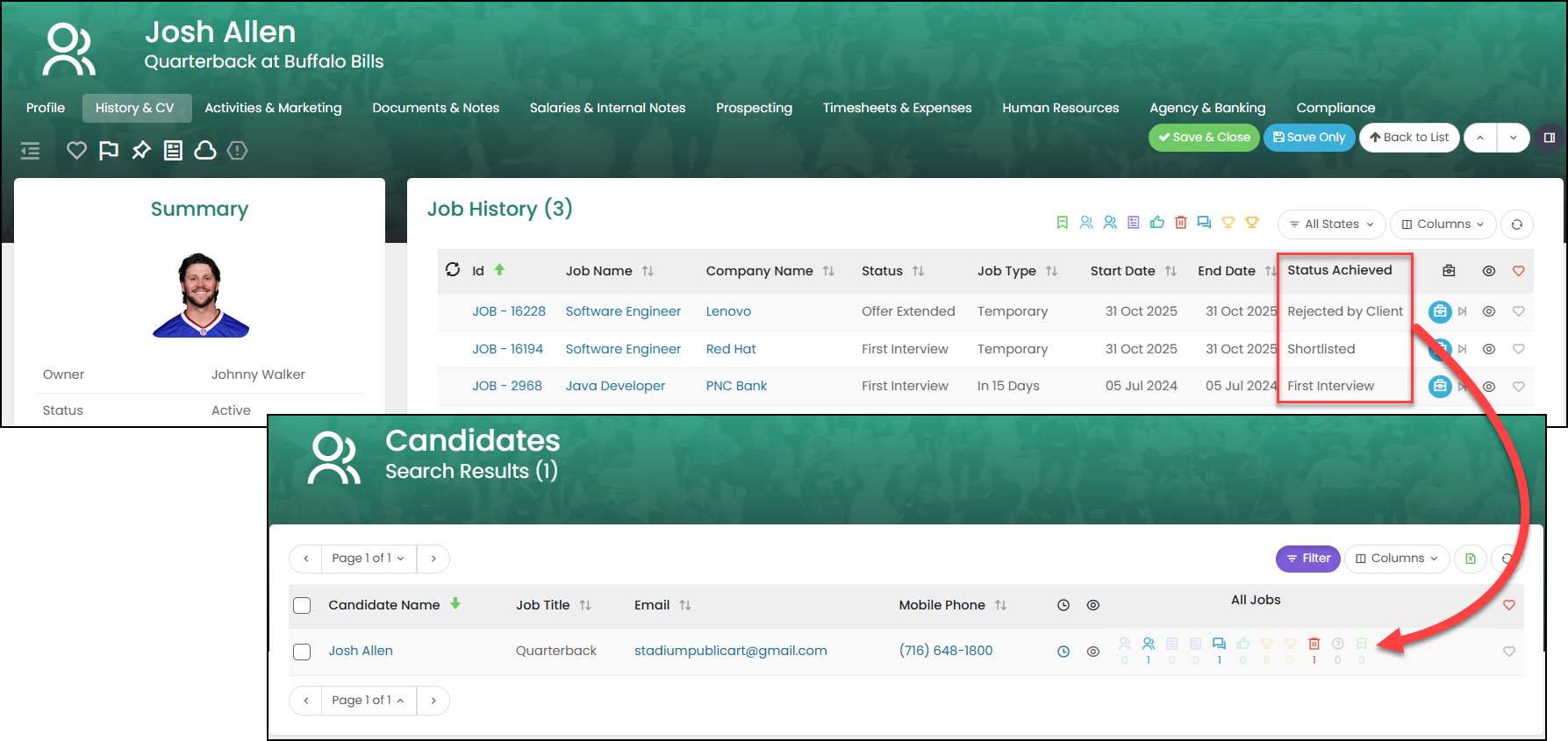
- Candidate summaries that condense a profile into what matters for the role
- Candidate strengths and weaknesses mapped against a specific job description and resume
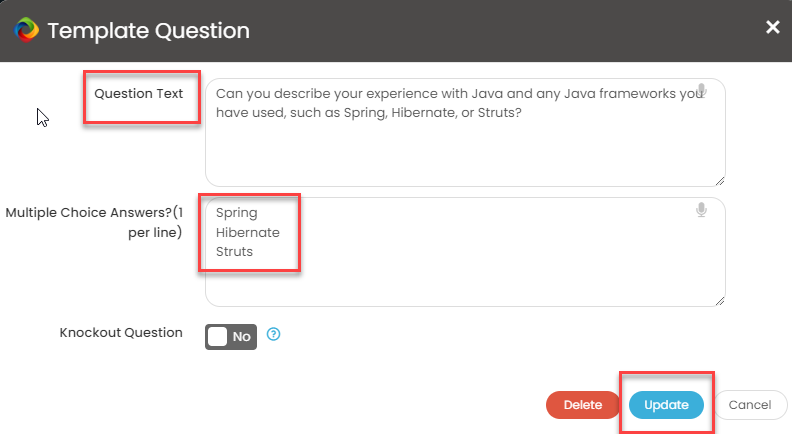
- Screening questions generated by job level or by candidate
- Resume reformatting into a firm’s branded template
- AI-powered interview preparation surfaces candidate strengths and gaps against the job spec before the conversation starts
- Tracker’s Onboarding+ guides candidates and contractors through onboarding steps, paperwork, and common early questions automatically
- EVA, Tracker’s conversational AI assistant, handles candidate FAQs, email drafting, and helping to identify the best candidates for positions inside the platform.
Conclusion: Start putting AI in HR to work for your team
The 13 examples above are not a wish list. They’re already running inside staffing agencies today. The question worth asking isn’t whether to adopt AI in HR; it’s which of these capabilities fits where your team is losing the most time right now.
Book a demo to find out how TrackerAI fits into your existing workflow.