Enterprise recruitment teams are under increasing pressure to find qualified talent more quickly. Manual candidate discovery cannot keep up with the fast pace of modern business. The most successful agencies now use AI sourcing to identify top talent faster, reduce the time it takes to create shortlists, and build stronger talent pipelines.
Recruiting teams that consider AI tools as productivity boosters see real improvements in both speed and quality. They work smarter, not just faster.
What is AI sourcing, and how does it work?
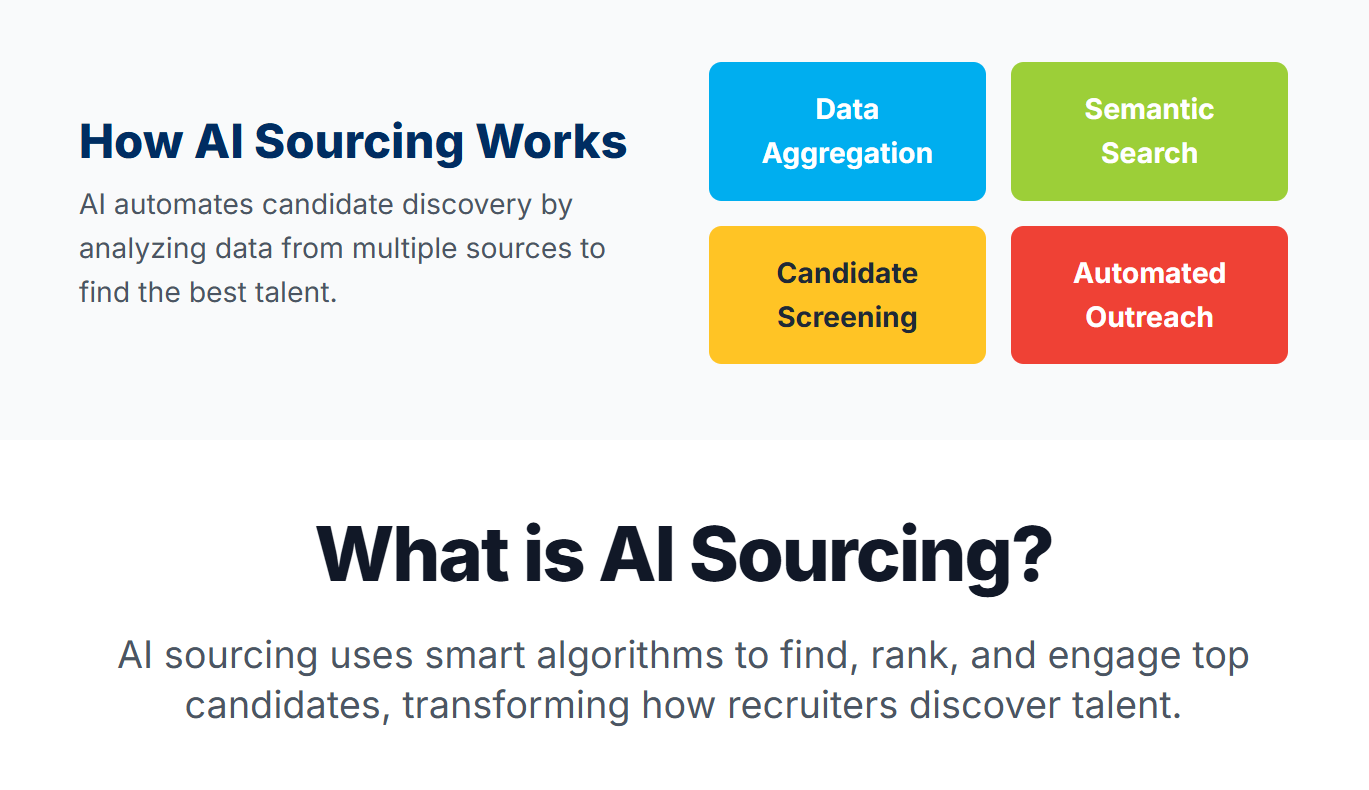
AI sourcing uses artificial intelligence to simplify and improve the process of finding, attracting, and engaging potential job candidates. It automates tasks such as scanning résumés, identifying relevant candidates across various platforms, engaging with potential applicants, and predicting candidate success based on data analysis.
Companies can reach both active and passive candidates, reduce manual effort, decrease bias, and make better hiring decisions through this HR technology.
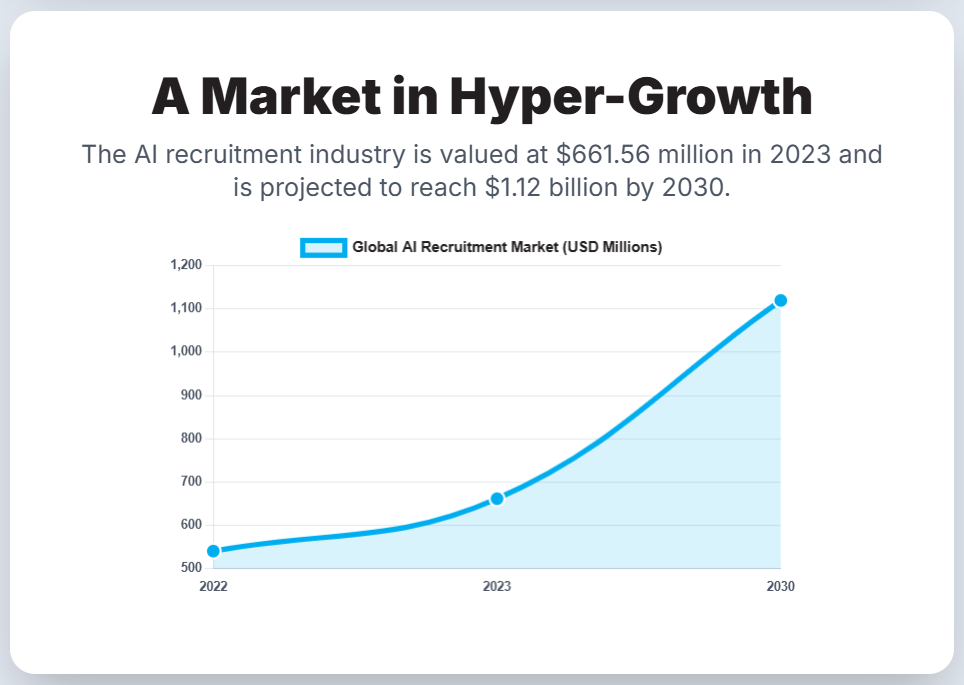
Source: DemandSage
The recruiting process consists of several key components:
- Data aggregation and enrichment: AI sourcing platforms scan online job boards, professional networks, applicant tracking systems, and CRM records to create detailed candidate profiles. Machine learning algorithms analyze and organize this candidate data, filling gaps with publicly available information.
- Semantic search capabilities: Instead of just relying on keyword matching, AI technology understands context and transferable skills. A search for “DevOps engineer” might reveal candidates with relevant experience in cloud architecture or automation, even without exact title matches.
- Algorithmic candidate screening: Smart ranking systems score candidates based on role requirements, past performance, and success patterns. Human recruiters receive prioritized shortlists instead of lengthy candidate pools that need manual review.
- Automated sourcing platforms: These systems start contact sequences, schedule interviews, and track engagement metrics. Recruiters keep control over messaging and approval processes while automation takes care of repetitive tasks.
AI sourcing is not meant to replace a recruiter’s judgment. Successful teams see it as a tool that improves sourcing productivity, allowing humans to focus on building relationships and making strategic decisions.
Benefits and limitations of AI sourcing
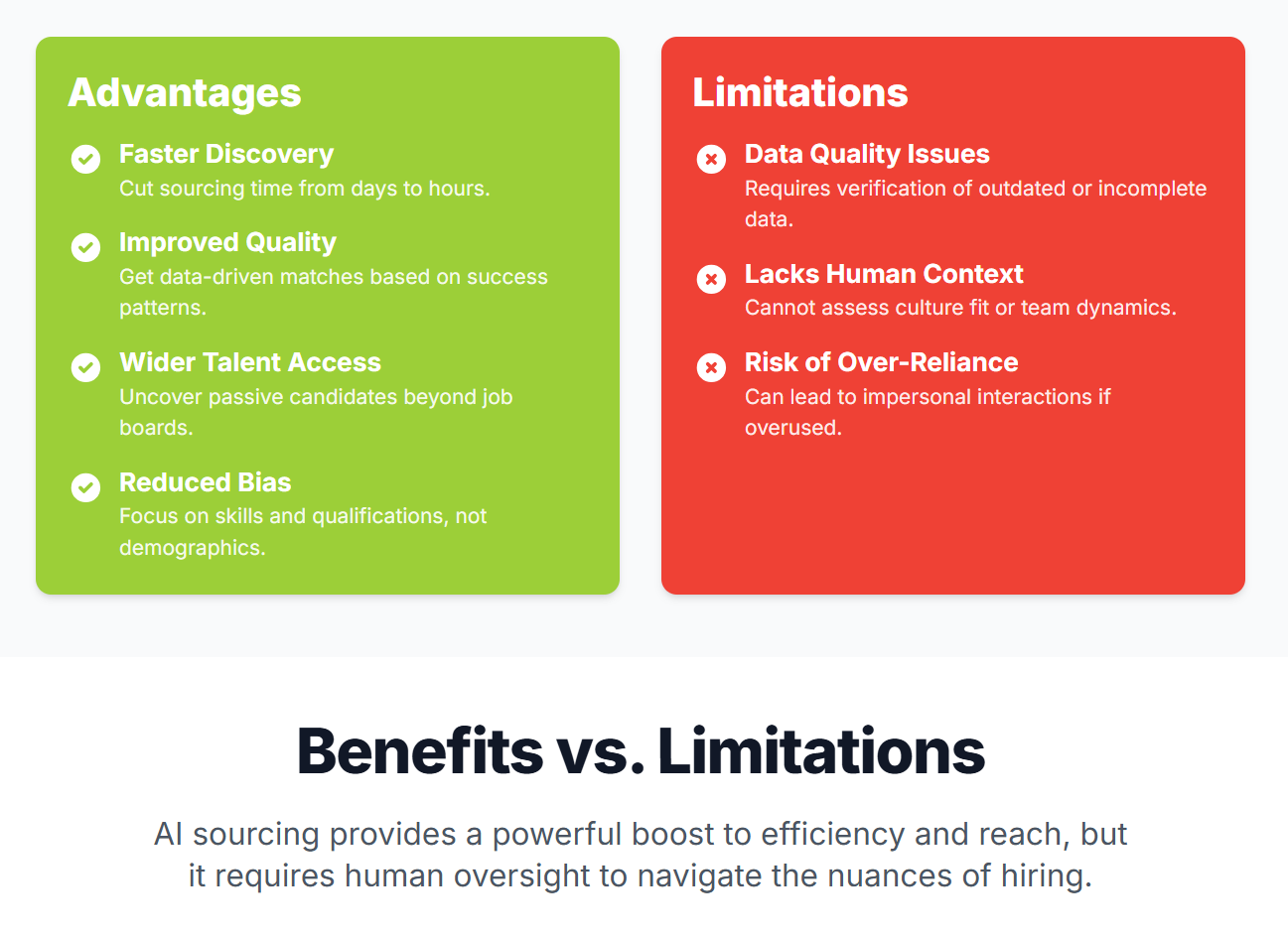
Knowing both the advantages and limitations helps recruitment teams use AI sourcing tools effectively.
Advantages that drive ROI
- Faster candidate discovery: Teams can cut initial sourcing time from days to hours. Research shows that 86.1% of recruiters believe predictive analytics speeds up the hiring process.
- Better candidate quality through data-driven matching: AI sourcing tools analyze historical placement data to spot patterns in successful hires. This results in more accurate candidate recommendations based on real outcomes rather than just qualifications.
- Broader access to talent pools: Sourcing automation tools reveal passive candidates who fit the requirements but aren’t actively looking for jobs. This expands the available talent base beyond those currently applying.
- Less bias in initial screening: When set up correctly, AI tools focus on job-relevant criteria instead of demographic factors. However, careful governance is necessary to prevent reinforcing historical biases.
Limitations that need human oversight
- Data quality issues: Outdated social media profiles and incomplete information can affect results. Regular data checks and verification are important.
- Limited understanding of context: AI tools find it hard to grasp nuanced requirements like team dynamics, company culture fit, and motivation factors that affect long-term success. Human traits like empathy, creativity, and leadership are vital for effective recruitment decisions.
- Risks of over-reliance: Teams that automate excessively may lose personal connections with candidates, which could lower response rates and candidate experience quality.
Effective deployment balances the efficiency of automation with human expertise where it matters most.
Where AI sourcing fits into strategic recruitment
The most effective teams find specific workflow points where AI sourcing tools provide the most value and integrate them strategically.
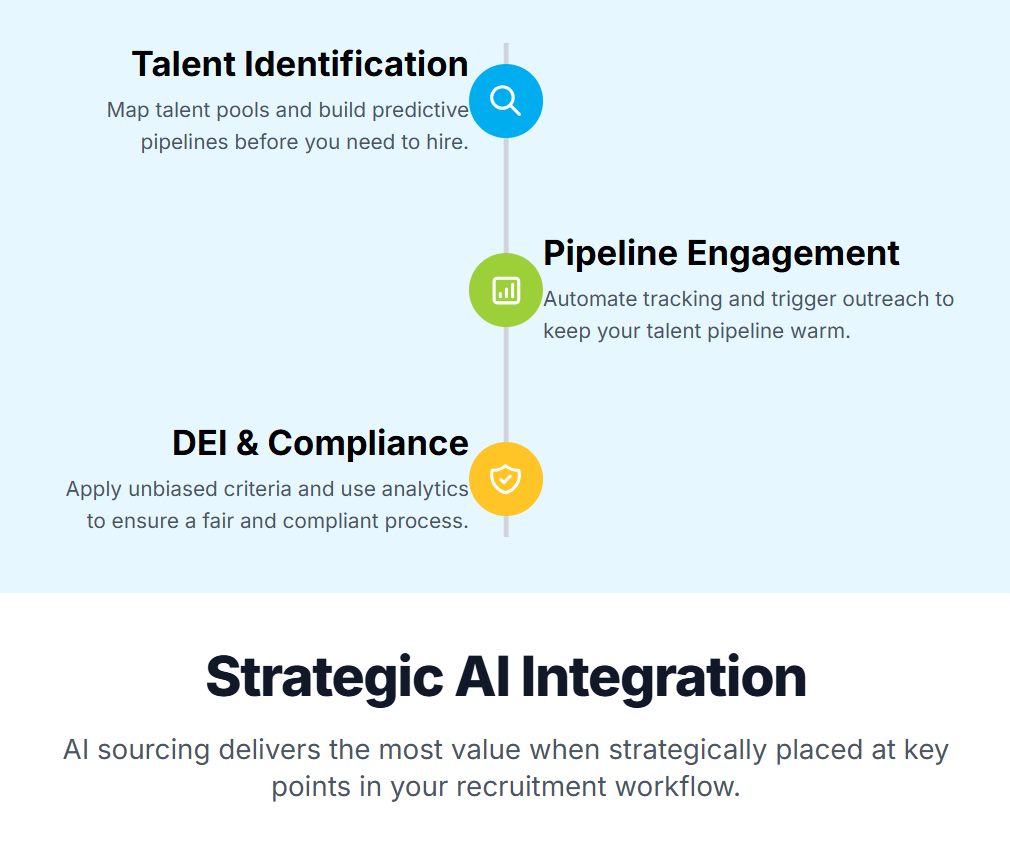
Early-stage talent identification
- Thorough talent mapping: Recruitment automation software scans available talent across different regions and skill sets, creating segmented databases for future opportunities.
- Predictive pipeline building: For enterprise clients with steady hiring needs, generative AI maintains “warm” talent pools organized by skills, availability, and interest levels.
Pipeline development and engagement
AI sourcing tools help keep things consistent through systematic candidate relationship management:
- Automated tracking systems: These systems monitor candidate interactions, automatically updating availability status and career progression using natural language processing.
- Trigger-based outreach: When qualified candidates change jobs or indicate openness to new opportunities, recruitment efficiency tools initiate appropriate outreach sequences through email campaigns.
Supporting diversity and compliance goals
- Structured matching criteria: AI sourcing can help create a fair hiring process when set up correctly. These systems prioritize qualifications and performance metrics rather than personal opinions.
- Ongoing monitoring: Teams must review AI recommendations to make sure algorithms do not perpetuate existing biases. Specialized DEI technology tools offer recruitment analytics to track progress against diversity goals over time.
How recruiters are using AI sourcing tools today
Leading agencies use consistent methods that improve results while keeping service quality high by using effective talent sourcing strategies.
Key implementation approaches:
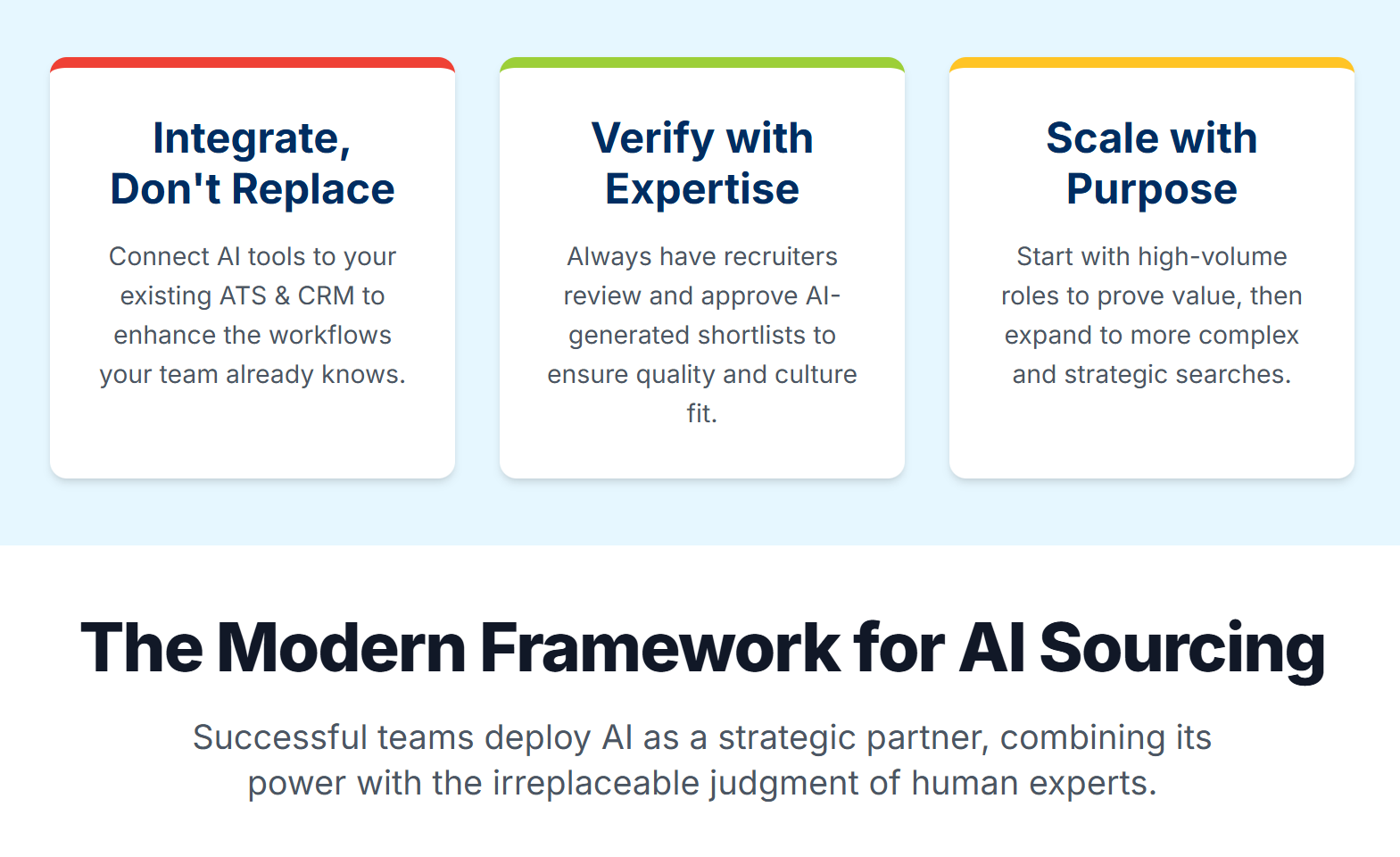
- Integration over replacement: Successful teams connect AI sourcing tools to their existing ATS and CRM systems instead of overhauling established workflows.
- Defined approval processes: Recruiters check AI-generated shortlists before showing them to clients. They use automated candidate sourcing strategies.
- Measured expansion of automation: Teams begin with high-volume, standardized roles. After that, they apply AI sourcing to more complex executive searches.
Performance tracking focus:
- Time-to-shortlist reduction (studies show up to 18% improvement)
- Client acceptance rates for AI-recommended candidates using recruiting analytics
- Overall placement success rates and quality of hire metrics
- Improvements in candidate engagement and response rates
How Tracker supports AI-driven sourcing
Tracker combines ATS and CRM functions with AI features for recruitment agencies. The platform automates routine tasks and helps recruiters make better decisions.
Core capabilities:
- EVA assistant integration: Tracker’s conversational AI manages common sourcing requests through voice or text commands. Recruiters can quickly find candidates, rank prospects, and access recommendations without navigating multiple screens.
- Cross-platform search and matching: The system searches internal databases and connected platforms at the same time. It then ranks results based on customizable matching criteria.
- Automated job monitoring: Watchdog features scan subscribed platforms for new candidates that match open roles. The system identifies promising prospects and provides recruiters with organized, ranked results to review. It also automatically sends potential matches a personalized email, and consultants get nudged to make a callback. The hands-free way to be first to a candidate.
- Intelligent outreach sequences: AI-generated or custom written email campaigns engage candidates at the right times.
- Compliance and reporting tools: Built-in governance features track sourcing activities and maintain audit trails. This supports regulatory requirements and provides visibility into team performance.
Learn more about Tracker AI capabilities and how they fit with comprehensive recruitment tech stacks.
Final thoughts: building a smarter sourcing strategy
Agencies that succeed in today’s competitive environment know which human skills AI sourcing tools improve and which they cannot replace. These systems handle large amounts of work and repetitive tasks well. However, your expertise is what decides which candidates succeed.
Start with one role type. Measure improvements in speed and quality. Then, expand based on the results. The real opportunity is not just faster sourcing. It lies in repositioning your team as advisors instead of administrators.
Want to improve candidate discovery with smarter technology? Tracker helps recruitment agencies save time and find better matches through AI-powered sourcing capabilities that fit with existing workflows.